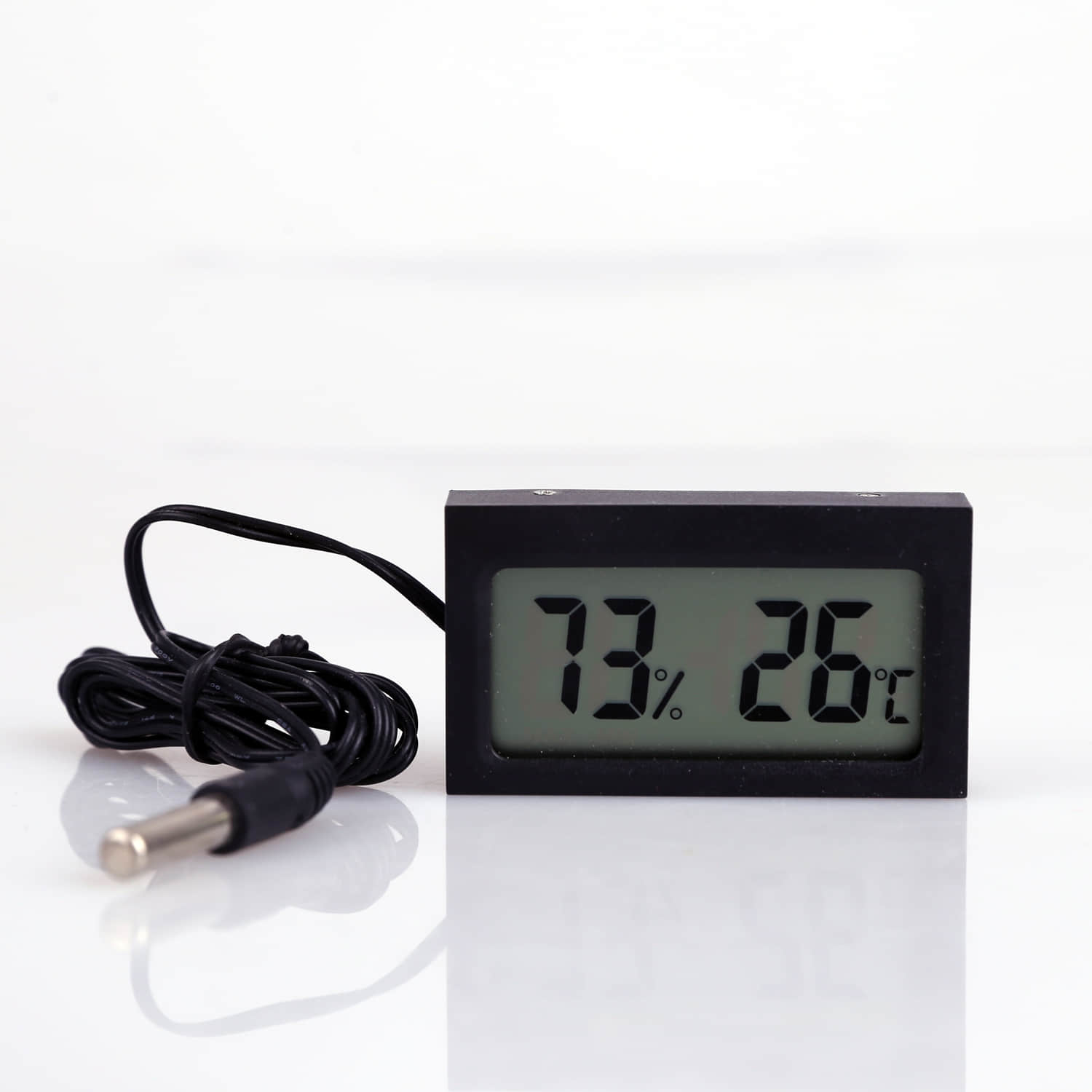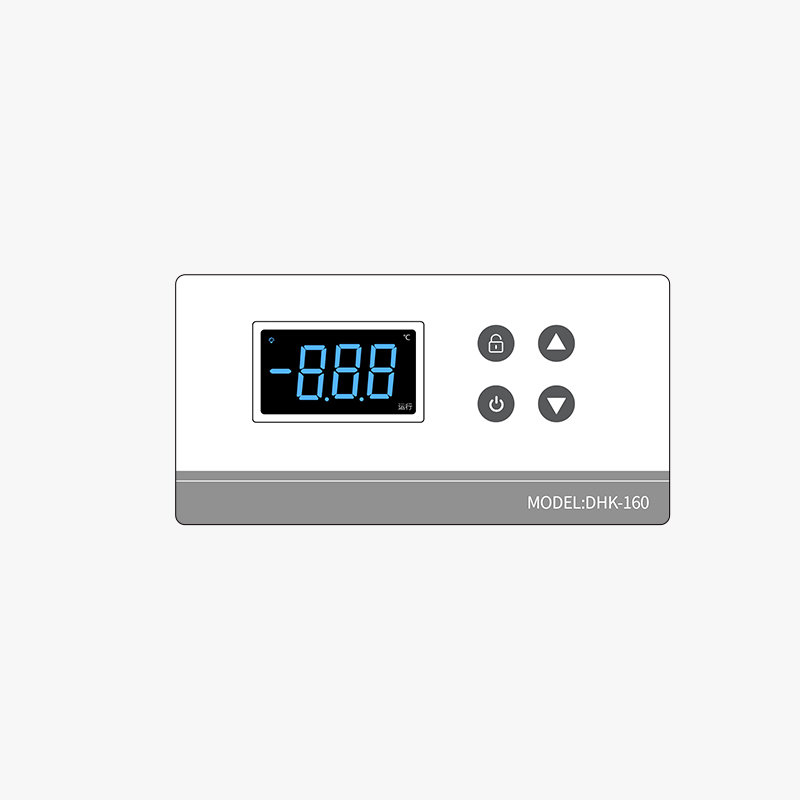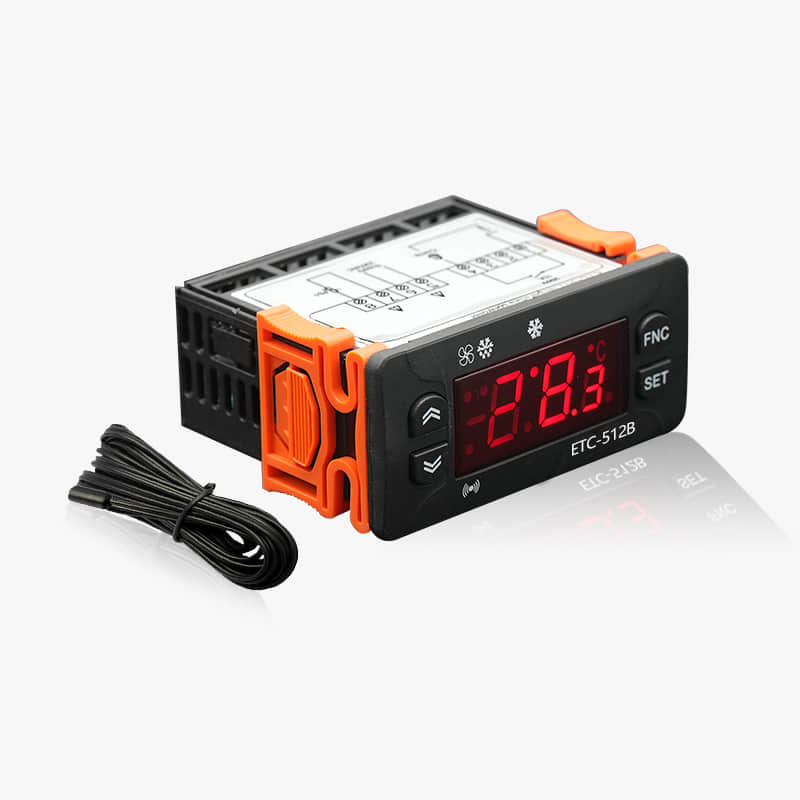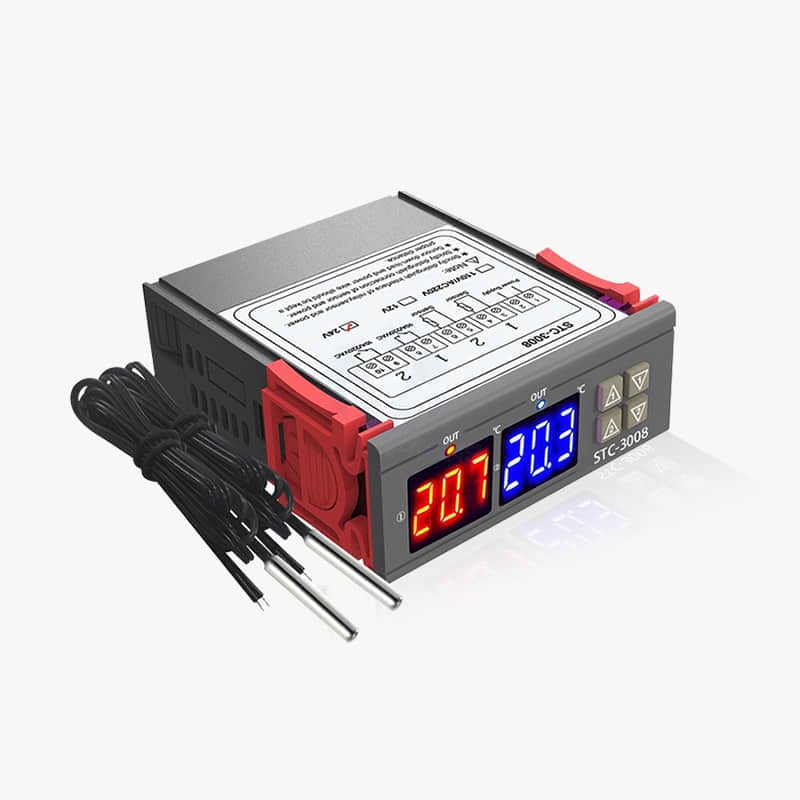
A commercial refrigerator monitoring system is more than a thermometer installed inside a cabinet.
A practical system combines temperature sensing, local refrigeration control, remote visibility, alarm rules and a clear response process.
When these elements are planned together, operators can detect abnormal conditions earlier and reduce the time between discovering a problem and taking corrective action.
WiFi temperature controllers can serve as connected control points in cold rooms, refrigerated display cabinets and commercial freezers. However, the exact monitoring capabilities depend on the controller model, mobile app and network configuration.
Every project should therefore be designed around verified functions rather than assumed cloud features.
The temperature sensor must be suitable for the required operating range and installed in an appropriate position.
The sensor should represent normal storage conditions without being directly affected by:
• Frequent door opening
• Evaporator air discharge
• Defrost heaters
• Direct sunlight
• Warm products recently placed inside
• Areas with restricted airflow
Sensor position can be just as important as controller accuracy. Incorrect installation may produce misleading readings even if the sensor itself is working correctly.
The temperature controller manages the refrigeration sequence at the equipment.
Depending on the application and selected configuration, this may include:
• Compressor control
• Defrost timing
• Evaporator-fan operation
• High- and low-temperature alarms
• Sensor-fault protection
• Compressor-delay protection
Local control should continue operating normally when remote connectivity is temporarily unavailable.
WiFi should improve visibility and convenience, but essential refrigeration operation should not depend entirely on an internet connection.
The installation site needs a compatible WiFi network with sufficient signal strength at the final controller location.
During commissioning, verify:
• WiFi signal strength
• Pairing process
• Account ownership
• Authorized users
• Device-sharing permissions
• Remote temperature display
• Supported remote settings
• Alarm notifications
Give every connected device a clear name.
For example, use “Store 03 – Frozen Display 02” instead of keeping a generic factory name. Clear naming helps users identify the correct equipment when a notification appears.
High- and low-temperature alarm limits should be based on the actual product and equipment requirements—not on a universal default.
Consider:
• Normal operating temperature
• Product type
• Door-opening frequency
• Defrost cycle
• Sensor position
• Equipment recovery time
• Acceptable temperature variation
Where supported, an appropriate alarm delay can help avoid unnecessary notifications during normal door openings or defrost.
However, an excessive delay may allow a real temperature problem to continue for too long. Alarm settings should balance early warning with practical operation.
Sensor-fault notifications should also be tested during commissioning.
An alarm is only useful when someone knows what to do.
Before the system begins operating, define:
• Who receives the notification
• Who is responsible outside business hours
• How quickly the alarm should be acknowledged
• Which conditions require an on-site inspection
• When products should be moved
• How the event is recorded
• Who reviews repeated alarms
The response procedure should be tested before valuable refrigerated products are placed inside the equipment.
A standalone refrigerator monitor observes temperature but normally does not control the compressor, defrost heater or evaporator fan.
A refrigeration controller actively manages the equipment and may also provide connected temperature monitoring.
Before selecting a device, buyers should decide whether the project requires:
• Temperature monitoring only
• Refrigeration control only
• Integrated control and remote monitoring
This distinction helps prevent the wrong product from being selected for an existing cabinet or a new OEM design.
1.Create a list of every unit to be connected.
2.Record the controller model and application.
3.Record the firmware, sensor and wiring information.
4.Check the WiFi signal at every installation position.
5.Use consistent device names.
6.Set alarm limits according to application type.
7.Assign access only to responsible users.
8.Remove access when an employee leaves the company.
9.Perform a controlled high-temperature test.
10.Perform a sensor-fault test.
11.Keep a local manual and wiring diagram for technicians.
12.Record the commissioning results.
The SHTROL ECS-974T WiFi Refrigeration Controller can provide mobile temperature visibility and remote access to supported settings while carrying out refrigeration control functions.
For a multi-unit monitoring project, provide SHTROL with a device schedule containing:
• Equipment type
• Number of units
• Supply voltage
• Required outputs
• Sensor information
• Operating temperature
• Defrost method
• Required alarm functions
• Expected user-access method
• Branding requirements
The technical team can then evaluate the application, confirm whether the proposed configuration is suitable and prepare samples for testing.
 Hot News
Copyright © 2026 Xuzhou sanhe automatic control equipment Co.,LTD. All right reserved
Privacy Policy