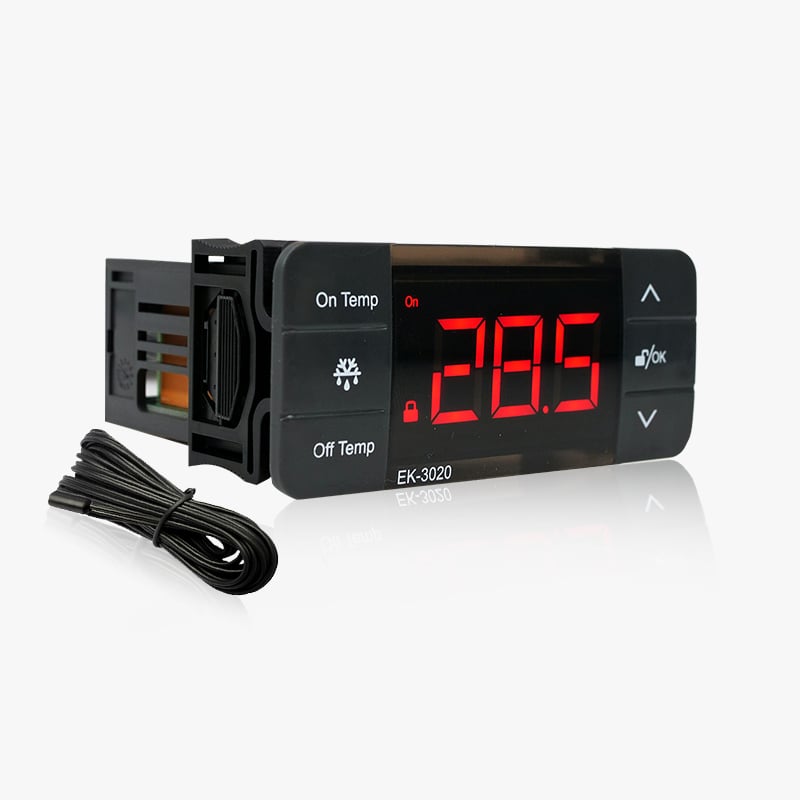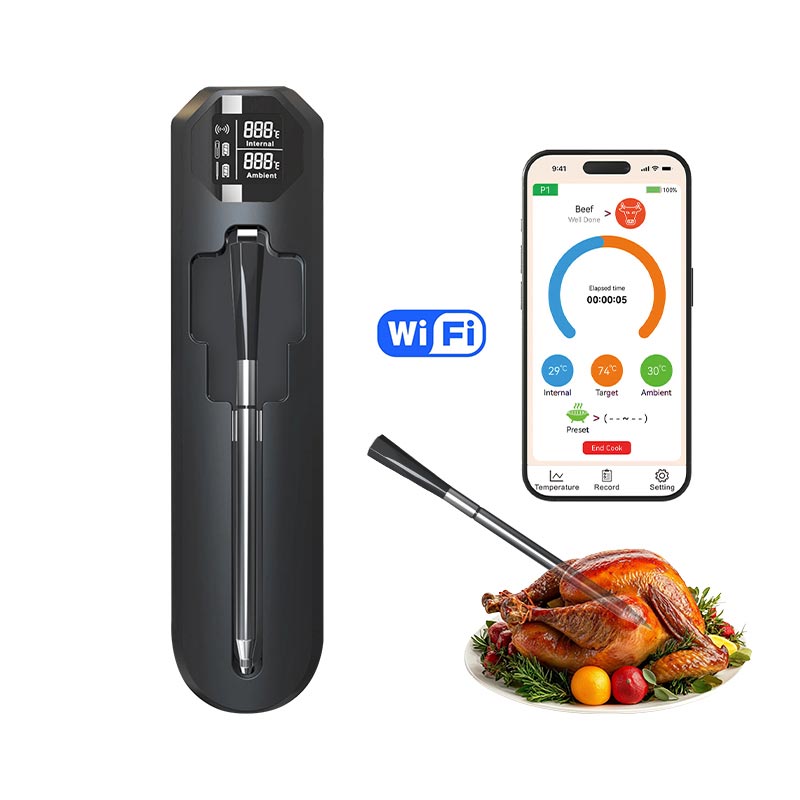
A freezer may look normal from the outside while the internal temperature is already moving in the wrong direction.
A door may not close correctly, a temperature sensor may fail, or the refrigeration system may stop after employees leave.
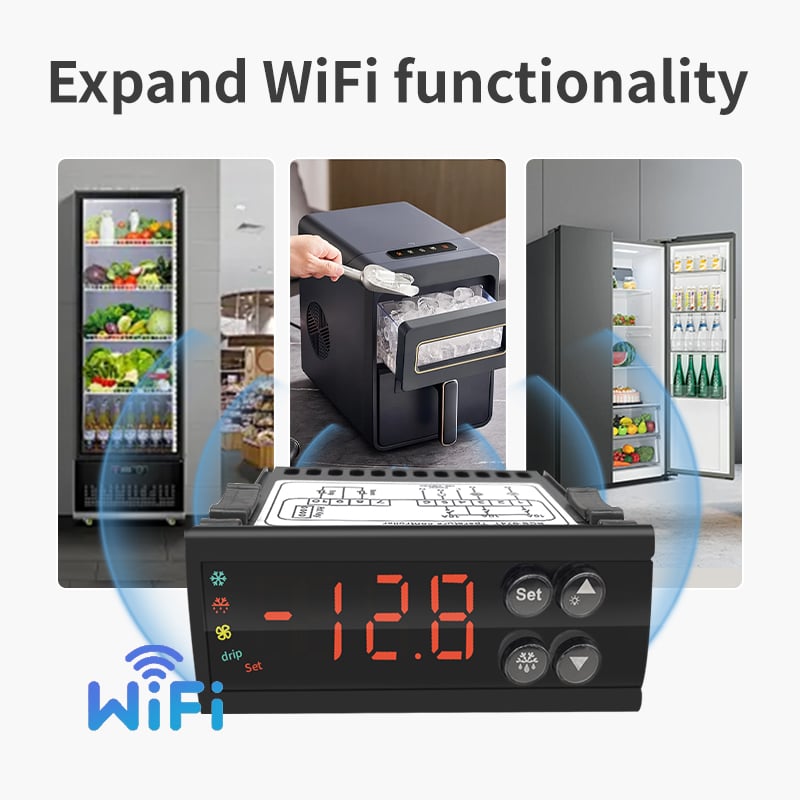
A WiFi freezer alarm helps notify an authorized user through a compatible mobile app when the connected controller detects an abnormal temperature or supported sensor fault.
This can help operators discover potential problems sooner instead of waiting until someone checks the freezer in person.
A WiFi freezer alarm uses a temperature sensor, configured alarm limits and a network connection to provide remote notifications.
When the alarm function is integrated into a refrigeration controller, the same device may also manage:
• Compressor operation
• Defrost cycles
• Evaporator-fan operation
• Temperature settings
• Compressor-delay protection
This creates an integrated solution for local refrigeration control and remote temperature visibility.
Depending on the controller model and configuration, supported notifications may include:
• High-temperature alarm
• Low-temperature alarm
• Temperature-sensor failure
• Other supported sensor abnormalities
Buyers should confirm the exact notification types, app functions and firmware version before purchasing.
Alarm limits should not be copied directly from another freezer.
The correct settings depend on:
• Product type
• Normal operating temperature
• Door activity
• Defrost behavior
• Sensor position
• Refrigeration capacity
• Normal temperature recovery time
If an alarm is too sensitive, ordinary door openings or defrost cycles may produce repeated notifications. Users may eventually begin ignoring them.
If the alarm range is too wide or the delay is too long, the warning may arrive after the risk has already increased.
A practical setup should:
• Define the high- and low-temperature limits according to the operating specification.
• Use an appropriate alarm delay where supported.
• Test the alarm under a controlled temperature condition.
• Test the sensor-fault notification.
• Confirm who receives notifications outside business hours.
• Record the action taken after an alarm.
• Review repeated alarms to identify possible equipment problems.
Remote freezer alarms can be used in:
• Restaurant and commercial-kitchen freezers
• Supermarket display freezers
• Supermarket back-room storage
• Ice-cream cabinets
• Frozen-food retail equipment
• Small cold rooms
• Walk-in freezers
• Refrigeration equipment at unattended locations
• Commercial refrigeration test facilities
They are particularly useful where valuable frozen products are stored or the equipment is not continuously supervised.
A local buzzer is useful only when someone is close enough to hear it.
A WiFi notification can reach an authorized user who is away from the equipment, but it depends on network and app availability.
For important refrigeration installations, local protection and remote notification should be treated as complementary layers.
The controller’s local operation, alarm logic and remote communication should all be tested during installation.
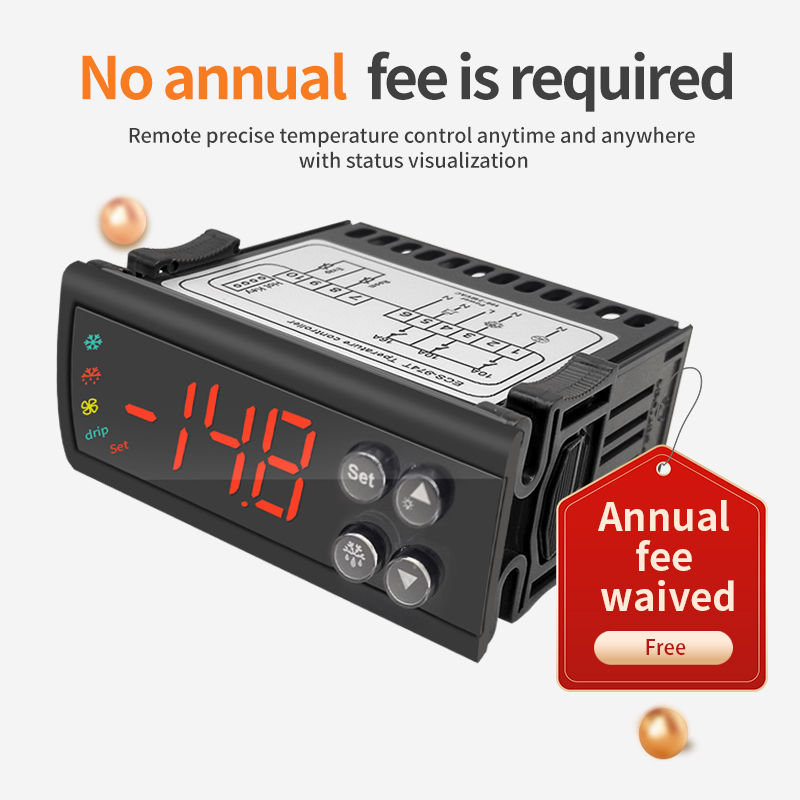
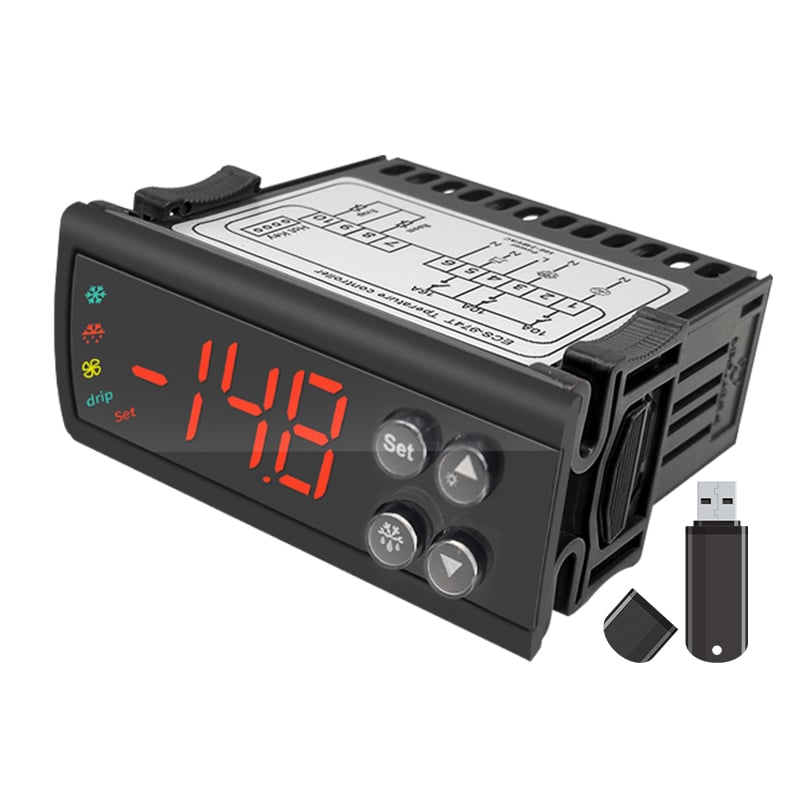
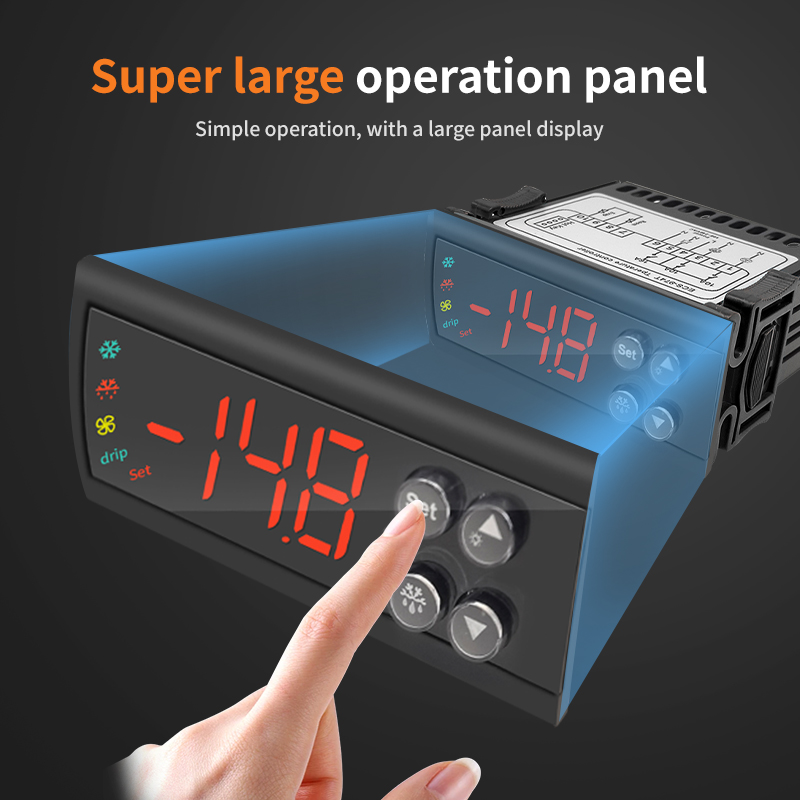
The SHTROL ECS-974T combines refrigeration-control functions with mobile connectivity.
Through a compatible mobile app, authorized users can:
• View temperature information remotely
• Access supported temperature settings
• Receive compatible alarm notifications
• Check operating information supported by the selected configuration
Before installation, confirm the following information against the latest datasheet and wiring diagram:
• Supply voltage
• Output configuration
• Sensor type
• Temperature range
• Relay requirements
• Alarm logic
• Panel dimensions
• Wiring arrangement
• VApp and firmware functions
• Which alarm types are supported by this firmware and app?
• Does local refrigeration control continue if WiFi is unavailable?
• Can the alarm limits and delay settings be adjusted?
• How are devices shared with additional users?
• What sensor and wiring are supplied?
• Which compressor, defrost and fan functions are included?
• Can the supplier provide an approved sample?
• Do the manual and wiring diagram match the actual product?
• Can parameters, branding and packaging be customized?
• How is mass-production consistency controlled?
For refrigeration distributors and OEM manufacturers, a WiFi freezer alarm is not only an end-user feature.
It can make the finished refrigeration equipment easier to supervise and more attractive to customers who manage valuable refrigerated or frozen products.
SHTROL supports qualified projects with sample evaluation, parameter confirmation, branding options, customized packaging and OEM quotations.
Send us your equipment type, supply voltage, operating temperature, required outputs, estimated annual quantity and customization requirements to receive a suitable WiFi refrigeration controller recommendation.
 Hot News
Copyright © 2026 Xuzhou sanhe automatic control equipment Co.,LTD. All right reserved
Privacy Policy