
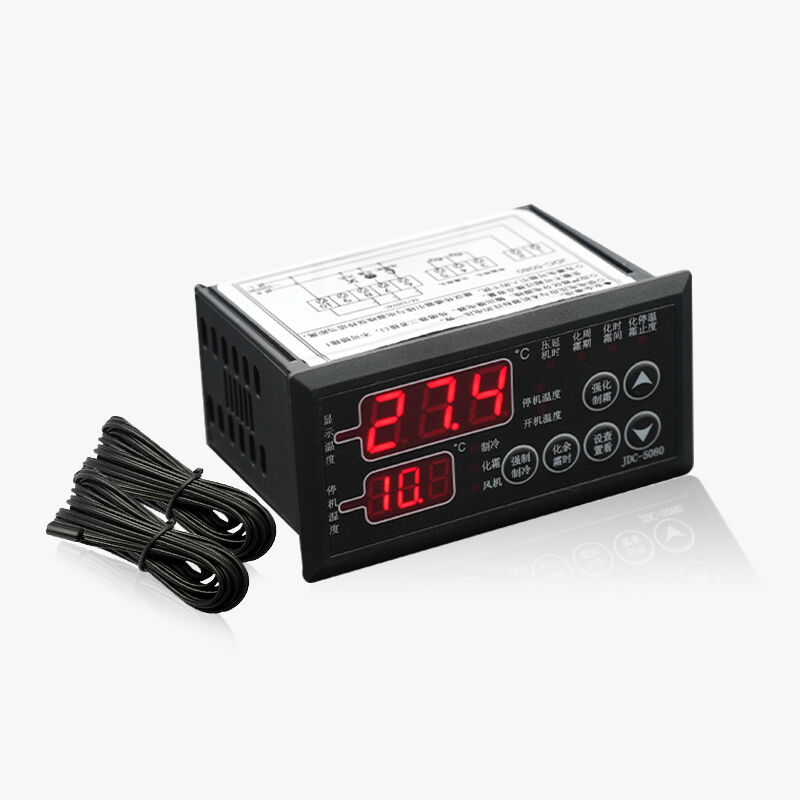
Modern industrial and commercial operations rely heavily on precise temperature control systems to maintain optimal conditions across various applications. When a temperature controller malfunctions, it can disrupt entire production processes, compromise product quality, and lead to significant financial losses. Understanding common issues that affect temperature controller performance and knowing how to troubleshoot them effectively can save businesses both time and money while ensuring continuous operational efficiency.
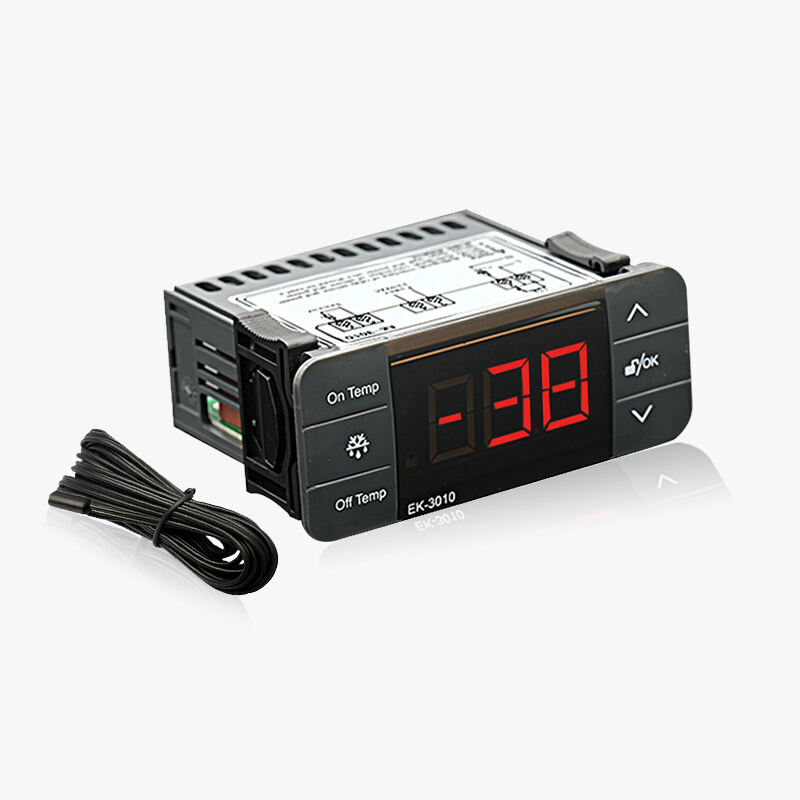
Understanding Temperature Controller Fundamentals
Core Components and Operation Principles
A temperature controller operates by continuously monitoring temperature readings from connected sensors and adjusting heating or cooling outputs to maintain desired setpoints. The basic control loop involves input sensors, processing units, output devices, and feedback mechanisms that work together to achieve precise temperature regulation. Most modern temperature controller units incorporate digital displays, programmable settings, and multiple input-output configurations to handle diverse operational requirements.
The control algorithm within a temperature controller processes sensor data and calculates appropriate responses based on proportional, integral, and derivative (PID) parameters. These parameters determine how quickly and accurately the system responds to temperature deviations. Understanding these fundamental principles helps technicians identify potential problem areas when troubleshooting issues with temperature controller systems.
Common Types and Applications
Industrial temperature controller applications span numerous sectors including food processing, pharmaceutical manufacturing, HVAC systems, and laboratory equipment. Each application requires specific temperature controller configurations tailored to environmental conditions, accuracy requirements, and operational constraints. Some systems utilize single-loop controllers for basic applications, while complex processes may require multi-zone temperature controller networks with advanced communication capabilities.
The selection of appropriate temperature controller technology depends on factors such as temperature range requirements, sensor compatibility, output capabilities, and integration needs with existing control systems. Understanding these application-specific requirements helps in diagnosing problems and implementing effective solutions when issues arise.
Most Frequent Temperature Controller Problems
Display and Interface Issues
Display problems represent one of the most common temperature controller malfunctions encountered in industrial settings. These issues can manifest as blank screens, flickering displays, incorrect readings, or unresponsive touch interfaces. Often, display problems stem from power supply fluctuations, internal component failures, or electromagnetic interference affecting the controller's electronic circuits.
When troubleshooting display issues, technicians should first verify proper power connections and voltage levels at the temperature controller terminals. Environmental factors such as excessive heat, moisture, or vibration can also contribute to display malfunctions. Regular inspection of display components and protective enclosures helps prevent many common interface problems from developing into more serious failures.
Sensor Communication Failures
Temperature sensor communication problems frequently cause temperature controller systems to provide inaccurate readings or lose control functionality entirely. These issues typically result from damaged sensor cables, loose connections, sensor drift, or incompatible sensor types. When sensor communication fails, the temperature controller cannot receive accurate temperature data, leading to improper heating or cooling responses.
Diagnosing sensor communication problems requires systematic testing of sensor resistance values, cable continuity, and signal integrity throughout the measurement circuit. Temperature controller manufacturers provide specific sensor specifications and testing procedures that help technicians identify faulty components and restore proper communication between sensors and control units.
Power Supply and Electrical Problems
Voltage Fluctuations and Power Quality
Power supply issues significantly impact temperature controller reliability and performance across industrial applications. Voltage fluctuations, power surges, and electrical noise can cause erratic behavior, programming loss, or complete system failures. Many temperature controller problems trace back to inadequate power conditioning or electrical installation issues that compromise system stability.
Implementing proper power protection measures, including surge suppressors, voltage regulators, and isolation transformers, helps minimize electrical problems affecting temperature controller operation. Regular monitoring of supply voltage levels and power quality parameters enables early detection of potential issues before they cause system failures or damage sensitive control components.
Grounding and Electromagnetic Interference
Poor grounding practices and electromagnetic interference (EMI) create significant challenges for temperature controller systems in industrial environments. Improper grounding can introduce measurement errors, communication problems, and safety hazards that compromise both accuracy and reliability. EMI from nearby equipment, motors, or switching devices can disrupt sensitive electronic circuits within temperature controller units.
Establishing proper grounding networks and implementing EMI mitigation strategies, such as shielded cables and filtered power supplies, reduces interference-related problems. The temperature controller installation should follow manufacturer guidelines for grounding and cable routing to minimize susceptibility to electrical interference sources.
Calibration and Accuracy Issues
Drift and Measurement Errors
Temperature controller accuracy can deteriorate over time due to sensor drift, electronic component aging, and environmental influences. Calibration drift typically develops gradually, causing measurements to deviate from true values and affecting process control quality. Regular calibration verification helps identify when temperature controller systems require adjustment or sensor replacement to maintain specified accuracy levels.
Establishing calibration schedules based on application requirements and environmental conditions ensures consistent temperature controller performance. Critical applications may require monthly calibration checks, while less demanding systems might need annual verification. Proper documentation of calibration results helps track system performance trends and predict when maintenance actions become necessary.
Environmental Compensation
Environmental factors such as ambient temperature changes, humidity variations, and vibration can affect temperature controller measurement accuracy and stability. Many applications require environmental compensation techniques to maintain consistent performance despite changing conditions. Advanced temperature controller systems incorporate automatic compensation algorithms, while simpler units may require manual adjustments.
Understanding environmental influences on temperature controller performance helps technicians implement appropriate compensation strategies and identify when environmental factors contribute to measurement problems. Proper installation practices, including adequate ventilation and vibration isolation, minimize environmental impacts on controller accuracy.
Control Algorithm and Tuning Problems
PID Parameter Optimization
Improper PID parameter settings cause many temperature controller performance issues, including oscillations, slow response times, and poor setpoint tracking. Each application requires specific PID tuning to achieve optimal control performance based on system characteristics such as thermal mass, heat transfer rates, and disturbance patterns. Default parameter settings rarely provide ideal performance for specific applications.
PID tuning procedures vary depending on temperature controller capabilities and system requirements. Some controllers offer auto-tuning functions that automatically determine appropriate parameters, while others require manual adjustment based on system response observations. Understanding PID theory and tuning techniques enables technicians to optimize temperature controller performance for specific applications.
Setpoint Programming and Ramping
Complex temperature controller applications often require programmable setpoint sequences, ramping profiles, and multi-step control programs. Programming errors, incorrect timing parameters, or logical sequence problems can cause unexpected system behavior and process disruptions. Careful program development and testing prevents many control-related issues from affecting production operations.
Modern temperature controller systems offer sophisticated programming capabilities including conditional logic, mathematical functions, and communication interfaces. Proper utilization of these features requires thorough understanding of programming syntax and system capabilities. Documentation of control programs and regular backup procedures protect against programming loss during maintenance activities.
Preventive Maintenance Strategies
Regular Inspection and Cleaning
Implementing systematic preventive maintenance programs significantly reduces temperature controller failure rates and extends equipment service life. Regular inspections should include verification of display operation, connection tightness, enclosure integrity, and environmental condition monitoring. Cleaning procedures remove dust, debris, and contamination that can affect electronic component reliability and heat dissipation.
Maintenance schedules should account for operating environment severity, system criticality, and manufacturer recommendations. Temperature controller systems operating in harsh environments require more frequent attention than those in controlled indoor conditions. Documented maintenance procedures ensure consistent service quality and help identify developing problems before they cause failures.
Calibration and Performance Verification
Periodic calibration verification ensures temperature controller systems maintain required accuracy throughout their service life. Calibration procedures should include sensor testing, controller verification, and overall system performance evaluation. Maintaining calibration records helps track performance trends and supports quality assurance requirements in regulated industries.
Professional calibration services provide traceable standards and certified procedures for critical temperature controller applications. Some organizations develop internal calibration capabilities using portable calibrators and reference standards. The choice between internal and external calibration depends on accuracy requirements, volume of equipment, and available resources.
Advanced Diagnostic Techniques
Signal Analysis and Monitoring
Advanced diagnostic techniques help identify subtle temperature controller problems that may not be apparent through basic troubleshooting methods. Signal analysis tools can reveal measurement noise, interference patterns, and communication errors that affect system performance. Continuous monitoring systems track key performance parameters and alert operators to developing problems.
Data logging capabilities in modern temperature controller systems provide valuable diagnostic information for troubleshooting complex problems. Historical data analysis helps identify patterns, correlations, and trends that indicate specific failure modes or environmental influences. This information supports root cause analysis and helps prevent recurring problems.
Integration with Maintenance Management Systems
Integrating temperature controller monitoring with computerized maintenance management systems (CMMS) enables proactive maintenance strategies and improved reliability management. Automated data collection, alarm notification, and work order generation streamline maintenance processes and reduce response times to critical issues.
Modern temperature controller systems often include network communication capabilities that support integration with plant-wide monitoring systems. This connectivity enables remote diagnostics, centralized alarm management, and automated reporting that improves maintenance efficiency and system reliability.
FAQ
What causes a temperature controller to display erratic readings
Erratic temperature controller readings typically result from sensor problems, electrical interference, or loose connections. Check sensor wiring for damage or corrosion, verify proper grounding, and inspect for nearby sources of electromagnetic interference. Sensor drift or contamination can also cause unstable readings that require sensor cleaning or replacement to resolve.
How often should temperature controller calibration be performed
Temperature controller calibration frequency depends on application accuracy requirements, operating environment, and regulatory compliance needs. Critical applications may require monthly verification, while general industrial use typically needs annual calibration. Harsh environments or high-precision applications may require more frequent calibration to maintain acceptable accuracy levels.
Why does my temperature controller fail to maintain setpoint temperature
Temperature controller setpoint problems often stem from improper PID tuning, inadequate heating or cooling capacity, or system load changes. Verify that output devices are functioning properly, check for thermal leaks or changed load conditions, and review PID parameters for optimal tuning. Environmental changes or equipment aging may also require control parameter adjustments.
What steps should be taken when a temperature controller completely fails
When a temperature controller fails completely, first verify power supply connections and fuse conditions. Check for obvious physical damage, loose connections, or environmental contamination. If basic checks reveal no obvious problems, professional diagnosis may be required to determine if internal component failure requires repair or replacement of the entire unit.