
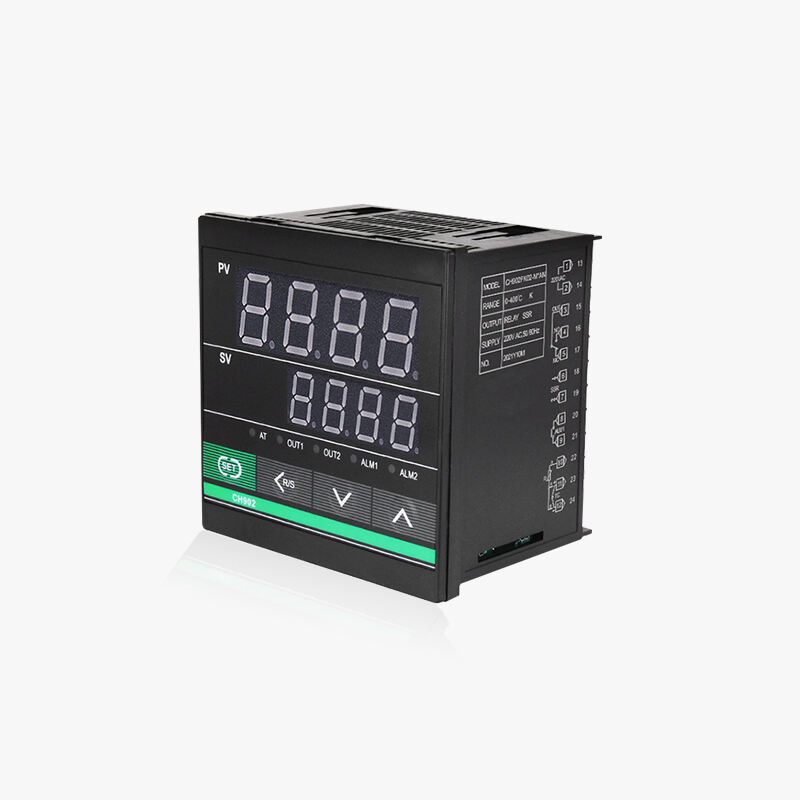
Industrial temperature control systems require precise, reliable, and efficient solutions to maintain optimal operating conditions across diverse manufacturing environments. The pid temperature controller represents the pinnacle of automated thermal management technology, offering unparalleled accuracy and stability for critical industrial processes. These sophisticated devices have revolutionized how industries approach temperature regulation, from pharmaceutical manufacturing to food processing, chemical production, and semiconductor fabrication. Understanding the comprehensive features and capabilities of modern pid temperature controller systems is essential for engineers, facility managers, and process control specialists seeking to optimize their operational efficiency while maintaining strict quality standards.
Advanced Control Algorithm Technology
Proportional Integral Derivative Functionality
The foundation of every effective pid temperature controller lies in its sophisticated three-component algorithm that continuously monitors and adjusts system parameters. The proportional component responds instantly to current temperature deviations, providing immediate corrective action proportional to the error magnitude. This rapid response capability ensures that temperature fluctuations are addressed before they can significantly impact process stability or product quality.
The integral component addresses accumulated errors over time, eliminating steady-state offset that could compromise long-term process accuracy. This mathematical integration function ensures that even minor temperature discrepancies are corrected, preventing the gradual drift that can occur in simpler control systems. The derivative component anticipates future temperature trends based on the rate of change, providing predictive control that minimizes overshoot and reduces settling time.
Adaptive Control Mechanisms
Modern pid temperature controller units incorporate adaptive algorithms that automatically adjust control parameters based on system behavior and environmental conditions. These intelligent systems learn from process dynamics and continuously optimize their response characteristics to maintain peak performance. The adaptive functionality proves particularly valuable in applications where load conditions vary significantly or where external disturbances regularly affect system stability.
Self-tuning capabilities enable the pid temperature controller to automatically determine optimal proportional, integral, and derivative gain values without manual intervention. This advanced feature eliminates the need for extensive manual tuning procedures while ensuring consistently superior control performance across varying operating conditions. The system continuously monitors control loop performance and makes incremental adjustments to maintain optimal response characteristics.
Precision Sensing and Measurement
Multi-Input Sensor Compatibility
Industrial pid temperature controller systems support extensive sensor input options, accommodating thermocouples, RTDs, thermistors, and various other temperature sensing devices. This versatility ensures compatibility with existing instrumentation while providing flexibility for future system expansions or modifications. The controller automatically recognizes sensor types and applies appropriate linearization algorithms to ensure accurate temperature readings across the entire measurement range.
Advanced signal conditioning circuitry within the pid temperature controller provides exceptional noise immunity and measurement stability, even in electrically harsh industrial environments. Built-in cold junction compensation for thermocouple inputs eliminates measurement errors that could compromise control accuracy. Multiple input channels allow simultaneous monitoring of multiple process points, enabling comprehensive thermal management of complex industrial systems.
High-Resolution Digital Processing
State-of-the-art analog-to-digital conversion technology delivers measurement resolution typically exceeding 16-bit accuracy, ensuring precise temperature detection and control. This high-resolution capability enables the pid temperature controller to detect and respond to temperature variations as small as 0.01 degrees Celsius, providing the precision demanded by critical industrial processes. Digital signal processing algorithms filter measurement noise while preserving rapid response to legitimate temperature changes.
Advanced calibration features allow field technicians to maintain measurement accuracy over extended operating periods without requiring laboratory-grade calibration equipment. The pid temperature controller stores multiple calibration curves and automatically applies temperature compensation to maintain accuracy across varying ambient conditions. This capability significantly reduces maintenance requirements while ensuring consistent measurement performance.
Output Control and Interface Options
Versatile Output Configurations
Comprehensive output options enable the pid temperature controller to interface with virtually any type of heating or cooling equipment commonly found in industrial applications. Relay outputs provide robust switching capability for resistive heating elements, contactors, and other high-power devices. Solid-state relay drivers offer silent, high-frequency switching suitable for precise power modulation applications where mechanical relay wear would be problematic.
Analog output signals, including 4-20mA current loops and 0-10V voltage signals, enable seamless integration with variable frequency drives, proportional valves, and other continuously variable control devices. The pid temperature controller can simultaneously operate multiple output channels, providing independent control of heating and cooling systems or managing complex multi-zone temperature profiles.
Advanced Communication Capabilities
Modern pid temperature controller systems incorporate comprehensive communication interfaces supporting industry-standard protocols including Modbus RTU, Ethernet TCP/IP, and various fieldbus networks. These communication capabilities enable seamless integration with supervisory control and data acquisition systems, allowing centralized monitoring and control of distributed temperature control systems throughout large industrial facilities.
Real-time data logging functionality captures detailed operational parameters, alarm conditions, and performance metrics for regulatory compliance and process optimization purposes. The pid temperature controller can store extensive historical data internally while simultaneously transmitting critical information to plant-wide data management systems. Remote access capabilities allow authorized personnel to monitor and adjust system parameters from any network-connected device.
Safety and Protection Features
Comprehensive Alarm Management
Sophisticated alarm detection and notification systems within the pid temperature controller provide multiple layers of process protection and operator awareness. High and low temperature alarms with independent setpoints ensure immediate notification when process conditions approach dangerous or unacceptable levels. Rate-of-change alarms detect abnormally rapid temperature variations that could indicate equipment malfunction or process upset conditions.
Sensor failure detection algorithms continuously monitor input signal integrity and automatically implement safe operating procedures when measurement problems are detected. The pid temperature controller can be configured to maintain last known good control output, switch to backup sensors, or implement predetermined safe shutdown procedures depending on the criticality of the application and available redundancy systems.
Fail-Safe Operation Protocols
Robust fail-safe mechanisms ensure that the pid temperature controller maintains safe operating conditions even during power interruptions, communication failures, or internal system faults. Battery-backed memory preserves critical configuration parameters and alarm setpoints during power outages, enabling immediate resumption of normal operation when power is restored. Watchdog timer circuits monitor system operation and implement predetermined safe actions if the control processor becomes unresponsive.
Output limiting features prevent the pid temperature controller from commanding excessive heating or cooling that could damage equipment or compromise process safety. Configurable output rate limits prevent rapid changes that could stress system components, while absolute output limits ensure that maximum safe power levels are never exceeded regardless of control algorithm demands.
Installation and Configuration Advantages
User-Friendly Setup Procedures
Intuitive configuration interfaces significantly reduce the time and expertise required to commission new pid temperature controller installations. Menu-driven setup procedures guide technicians through systematic configuration of all critical parameters, including sensor types, control algorithms, output assignments, and safety limits. Context-sensitive help information provides detailed explanations and recommended settings for common industrial applications.
Pre-configured application templates for common industrial processes eliminate the need for extensive manual parameter entry while ensuring optimal control performance. The pid temperature controller includes templates for furnace control, environmental chambers, chemical reactors, and other typical applications, with parameters already optimized for superior performance in each specific application type.
Flexible Mounting and Integration
Compact form factors and versatile mounting options enable the pid temperature controller to be integrated into virtually any control panel or equipment configuration. DIN rail mounting capability provides secure installation in standard electrical enclosures, while panel mount bezels offer attractive front-panel integration for operator interface applications. Environmental sealing options protect against dust, moisture, and corrosive atmospheres commonly encountered in industrial settings.
Extensive input/output terminal options accommodate various wiring configurations and connection preferences, from removable terminal blocks that facilitate maintenance to industrial connectors that provide robust, vibration-resistant connections. The pid temperature controller design considers real-world installation constraints while maintaining the electrical performance and reliability demanded by critical industrial applications.
Performance Optimization Features
Advanced Tuning Capabilities
Sophisticated auto-tuning algorithms enable the pid temperature controller to automatically determine optimal control parameters for any specific process application. The system applies controlled disturbances to the process and analyzes the resulting temperature response to calculate ideal proportional, integral, and derivative gain values. This automated approach eliminates guesswork while ensuring consistently superior control performance across diverse applications.
Manual tuning options provide experienced control engineers with complete flexibility to optimize performance for unique or particularly challenging applications. The pid temperature controller offers real-time tuning parameter adjustment with immediate visual feedback showing the effects of parameter changes on control loop performance. Advanced features like gain scheduling allow different control parameters to be applied at different operating points for optimal performance across wide operating ranges.
Process Monitoring and Analysis
Comprehensive process monitoring capabilities within the pid temperature controller provide detailed insights into system performance and potential optimization opportunities. Real-time trend displays show temperature, setpoint, and output values over selectable time periods, enabling operators to quickly assess control loop stability and identify potential issues before they impact product quality or process efficiency.
Statistical analysis functions calculate key performance metrics including standard deviation, peak-to-peak variation, and settling time characteristics. These quantitative measures enable objective evaluation of control performance and provide data-driven guidance for process improvements. The pid temperature controller can generate automated performance reports for management review and regulatory compliance documentation.
FAQ
What maintenance requirements are associated with industrial pid temperature controller systems
Industrial pid temperature controller systems require minimal routine maintenance due to their solid-state design and absence of mechanical components. Primary maintenance activities include periodic calibration verification, typically performed annually or according to quality system requirements, and cleaning of terminal connections to ensure reliable electrical contact. Sensor verification should be performed according to the specific sensor manufacturer recommendations, with thermocouple and RTD sensors typically requiring annual calibration checks in critical applications.
How do pid temperature controller units handle power supply variations and interruptions
Modern pid temperature controller designs incorporate wide-range power supply inputs that accommodate typical industrial power variations without affecting performance. Built-in power supply regulation maintains stable internal voltages even with input variations of plus or minus 15 percent or more. Battery backup systems preserve critical configuration data and alarm setpoints during power outages, while configurable startup procedures ensure safe, predictable system behavior when power is restored to prevent thermal shock or equipment damage.
What communication protocols do contemporary pid temperature controller systems support
Contemporary pid temperature controller systems typically support multiple communication protocols to ensure compatibility with existing plant automation infrastructure. Common protocols include Modbus RTU over RS-485 for serial communication, Ethernet TCP/IP for network-based systems, and various industrial fieldbus options such as DeviceNet, Profibus, or Foundation Fieldbus. Many controllers offer multiple communication ports operating simultaneously, enabling connection to both local operator interfaces and plant-wide supervisory systems without protocol conflicts.
How accurate are modern pid temperature controller measurement and control capabilities
Modern pid temperature controller systems achieve measurement accuracies typically within 0.1 percent of full scale or better, with some high-performance units reaching 0.05 percent accuracy under laboratory conditions. Control stability generally maintains process temperatures within plus or minus 0.1 degrees Celsius of setpoint under steady-state conditions, with some applications achieving even tighter control. These accuracy levels depend on proper sensor selection, installation quality, and appropriate system tuning, with the pid temperature controller providing the precision necessary for demanding industrial applications requiring strict thermal management.
Table of Contents
- Advanced Control Algorithm Technology
- Precision Sensing and Measurement
- Output Control and Interface Options
- Safety and Protection Features
- Installation and Configuration Advantages
- Performance Optimization Features
-
FAQ
- What maintenance requirements are associated with industrial pid temperature controller systems
- How do pid temperature controller units handle power supply variations and interruptions
- What communication protocols do contemporary pid temperature controller systems support
- How accurate are modern pid temperature controller measurement and control capabilities