
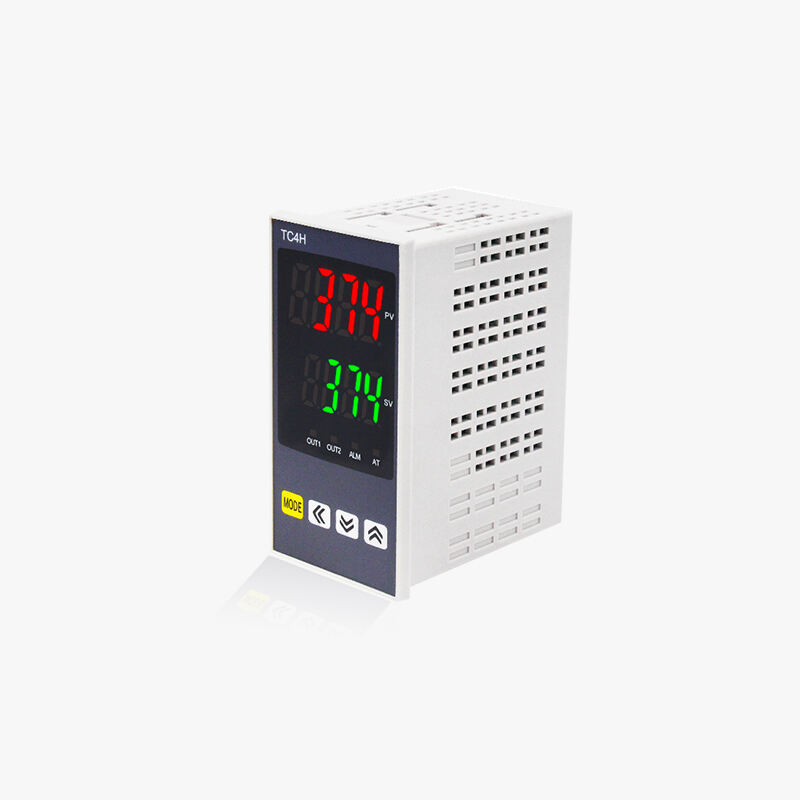
Temperature control represents a critical aspect of operations across numerous industries, from food processing and pharmaceutical manufacturing to laboratory research and HVAC systems. Small businesses often struggle to find the right balance between precision, reliability, and cost-effectiveness when selecting temperature control equipment. A high-quality pid temperature controller serves as the cornerstone of accurate thermal management, enabling businesses to maintain consistent product quality while optimizing energy consumption and operational efficiency.
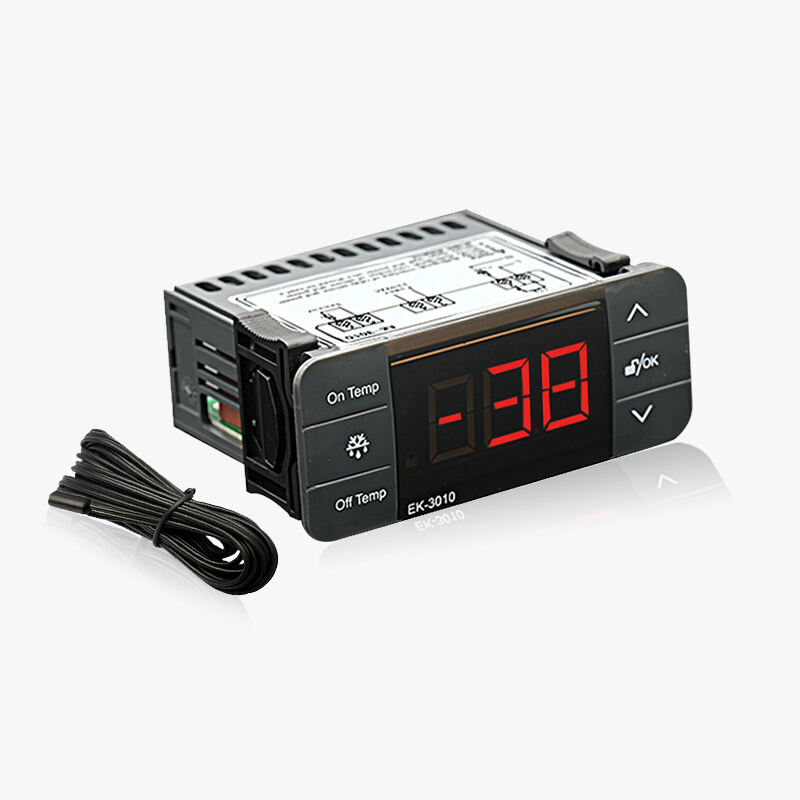
Modern pid temperature controller technology has evolved significantly, incorporating advanced algorithms and user-friendly interfaces that make precise temperature regulation accessible to businesses of all sizes. The proportional-integral-derivative control methodology provides superior stability compared to traditional on-off controllers, resulting in minimal temperature fluctuations and enhanced process consistency. For small businesses seeking competitive advantages through improved quality control, investing in the right temperature control solution can yield substantial returns through reduced waste, improved product consistency, and enhanced customer satisfaction.
The selection process for temperature control equipment involves careful consideration of multiple factors including temperature range requirements, environmental conditions, integration capabilities, and budget constraints. Understanding these parameters helps business owners make informed decisions that align with their operational needs and growth objectives. This comprehensive guide explores the essential features, benefits, and selection criteria for pid temperature controller systems specifically tailored to small business applications.
Understanding PID Temperature Control Technology
Fundamentals of PID Control Systems
The proportional-integral-derivative control algorithm forms the foundation of modern temperature regulation technology, offering superior performance compared to simple thermostatic controls. A pid temperature controller continuously calculates error values as the difference between desired setpoint and measured process variable, applying corrections based on proportional, integral, and derivative terms. The proportional component provides immediate response to current error conditions, while the integral term addresses accumulated past errors, and the derivative component anticipates future trends based on current rate of change.
This sophisticated control methodology enables precise temperature maintenance within tight tolerances, typically achieving accuracy levels of plus or minus one degree or better. The system automatically adjusts output power to heating or cooling elements based on real-time feedback, preventing the overshoot and oscillation common in simpler control systems. For small businesses requiring consistent thermal conditions, this level of precision translates directly into improved product quality and reduced material waste.
Advanced pid temperature controller units incorporate adaptive algorithms that learn from process characteristics and environmental changes, automatically optimizing control parameters for enhanced performance. These self-tuning capabilities reduce the technical expertise required for initial setup and ongoing maintenance, making sophisticated temperature control accessible to businesses without dedicated engineering staff.
Key Advantages Over Traditional Controls
Traditional on-off temperature controllers operate by simply switching heating or cooling elements fully on or off based on temperature thresholds, resulting in significant temperature swings and energy inefficiency. In contrast, a pid temperature controller modulates output power continuously, maintaining steady-state conditions with minimal fluctuation. This fundamental difference impacts both product quality and operational costs, particularly in applications requiring precise thermal conditions.
Energy efficiency represents another significant advantage of PID control technology, as the system optimizes power delivery based on actual thermal load requirements. Rather than cycling between full power and no power states, the controller provides exactly the amount of heating or cooling needed to maintain setpoint conditions. This approach reduces energy consumption by fifteen to thirty percent compared to traditional controls, generating substantial cost savings over time.
The enhanced stability provided by pid temperature controller systems also extends equipment lifespan by reducing thermal stress on heating elements and mechanical components. Consistent operating conditions minimize expansion and contraction cycles that contribute to component fatigue and premature failure, resulting in lower maintenance costs and improved system reliability.
Essential Features for Small Business Applications
Display and Interface Requirements
Modern pid temperature controller units feature intuitive digital displays that provide clear visibility of current temperature, setpoint values, and system status indicators. High-contrast LED or LCD displays ensure readability in various lighting conditions, while logical menu structures enable straightforward navigation through programming and monitoring functions. For small business environments where multiple staff members may interact with the equipment, user-friendly interfaces reduce training requirements and minimize operational errors.
Programmable setpoint capabilities allow operators to establish multiple temperature profiles for different products or process stages, enhancing operational flexibility without requiring hardware changes. Advanced units offer time-based programming features that automatically adjust temperatures according to predetermined schedules, enabling unattended operation during off-hours while maintaining optimal conditions for temperature-sensitive materials or processes.
Alert and alarm functions provide immediate notification of temperature deviations, equipment malfunctions, or maintenance requirements, enabling prompt corrective action before problems impact product quality or system operation. Visual and audible alarm indicators ensure operators remain aware of system status even when focused on other tasks, contributing to overall operational efficiency and product consistency.
Connectivity and Integration Options
Contemporary pid temperature controller systems offer various connectivity options that enable integration with existing facility management systems, data logging networks, and remote monitoring platforms. Serial communication protocols such as RS-485 or Modbus facilitate connection to building automation systems, while Ethernet interfaces support network-based monitoring and control applications.
Data logging capabilities enable businesses to maintain detailed records of temperature conditions for quality assurance, regulatory compliance, and process optimization purposes. Stored data can be exported for analysis using standard software applications, providing insights into system performance trends and identifying opportunities for efficiency improvements. This documentation proves particularly valuable for businesses serving regulated industries where temperature records form part of required quality documentation.
Remote monitoring functionality allows business owners and managers to oversee temperature-critical processes from off-site locations, providing peace of mind and enabling rapid response to unexpected conditions. Mobile app integration extends this capability to smartphones and tablets, ensuring constant connectivity regardless of location or time of day.
Selection Criteria for Small Business Needs
Temperature Range and Accuracy Specifications
Determining appropriate temperature range requirements forms the foundation of pid temperature controller selection, as different applications demand varying operational parameters. Food service establishments typically require controllers capable of handling refrigeration temperatures below freezing up to cooking temperatures exceeding three hundred degrees Fahrenheit, while laboratory applications may need precision control across narrower ranges with enhanced accuracy specifications.
Accuracy requirements directly impact controller complexity and cost, with high-precision applications justifying investment in premium units offering enhanced sensor inputs and advanced calibration features. Standard pid temperature controller systems typically provide accuracy within one to two degrees, while laboratory-grade units achieve precision of half a degree or better. Understanding actual accuracy needs prevents over-specification while ensuring adequate performance for intended applications.
Environmental operating conditions also influence selection criteria, as controllers installed in harsh environments require ruggedized construction and enhanced protection against moisture, vibration, and electromagnetic interference. Food processing facilities, outdoor installations, and industrial environments present unique challenges that must be addressed through appropriate equipment specification and installation practices.
Input and Output Configuration Options
Sensor input compatibility represents a crucial consideration, as different temperature measurement devices offer varying characteristics in terms of accuracy, response time, and environmental suitability. Thermocouple inputs provide wide temperature ranges and fast response times, while resistance temperature detectors offer superior accuracy and stability for precision applications. A versatile pid temperature controller should accommodate multiple sensor types to provide flexibility for current and future applications.
Output configuration options determine how the controller interfaces with heating and cooling equipment, with relay outputs suitable for simple on-off control of contactors and solenoids, while analog outputs enable proportional control of variable-speed drives and modulating valves. Solid-state relay outputs offer silent operation and extended lifespan for applications requiring frequent switching cycles, such as precise temperature maintenance in research environments.
Multiple output channels enable control of both heating and cooling systems from a single controller unit, providing cost-effective temperature regulation for applications requiring bidirectional control. This capability proves particularly valuable for environmental chambers, fermentation vessels, and other processes where temperature must be maintained within narrow tolerances regardless of external conditions.
Installation and Setup Considerations
Mounting and Electrical Requirements
Proper installation of a pid temperature controller requires careful attention to mounting location, electrical connections, and sensor placement to ensure optimal performance and long-term reliability. Panel-mount controllers integrate seamlessly with existing control panels, while DIN rail mounting options provide flexibility for distributed installation approaches. The selected mounting method should consider accessibility for operation and maintenance while protecting the unit from environmental hazards.
Electrical installation must comply with applicable codes and safety standards, with particular attention to proper grounding, conductor sizing, and overcurrent protection. Power supply requirements vary among different controller models, with some units operating on standard line voltage while others require low-voltage DC supplies. Understanding these requirements during the selection phase prevents costly modifications during installation.
Sensor installation location significantly impacts control performance, as temperature measurements must accurately represent the conditions being controlled. Sensors should be positioned to provide representative readings while avoiding areas subject to air drafts, direct heating, or other influences that could compromise measurement accuracy. Proper sensor mounting and thermal coupling ensure rapid response to temperature changes and stable control performance.
Initial Configuration and Tuning
Initial configuration of a pid temperature controller involves establishing basic parameters such as sensor type, temperature range, setpoint values, and alarm thresholds. Many modern units feature auto-tuning capabilities that automatically determine optimal control parameters through systematic testing of system response characteristics. This automated approach simplifies setup procedures and ensures proper tuning without requiring extensive technical knowledge.
Manual tuning procedures may be necessary for applications with unusual characteristics or specific performance requirements that exceed auto-tuning capabilities. Understanding the effects of proportional, integral, and derivative adjustments enables fine-tuning of control response to achieve desired performance characteristics. Conservative initial settings followed by gradual optimization typically provide the most reliable approach to manual parameter adjustment.
Documentation of configuration settings and tuning parameters facilitates future maintenance activities and troubleshooting procedures. Maintaining records of successful configurations enables rapid restoration of proper operation following component replacement or system modifications, minimizing downtime and ensuring consistent performance throughout the equipment lifecycle.
Cost-Benefit Analysis for Small Businesses
Initial Investment Considerations
The initial cost of a high-quality pid temperature controller represents a significant investment for small businesses, requiring careful evaluation of anticipated benefits versus acquisition and installation expenses. Premium controllers with advanced features and enhanced accuracy typically cost several times more than basic units, making it essential to match controller capabilities with actual application requirements to avoid unnecessary expense while ensuring adequate performance.
Installation costs may include electrical work, sensor mounting, programming, and commissioning activities that add to the total project investment. Professional installation ensures proper operation and may be required to maintain warranty coverage, but represents additional expense that must be factored into the economic analysis. Businesses with qualified maintenance staff may be able to reduce installation costs through in-house capabilities.
When evaluating controller options, consideration should be given to the total cost of ownership including initial purchase price, installation expenses, ongoing maintenance requirements, and expected service life. Higher-quality pid temperature controller units may justify premium pricing through extended warranty coverage, superior reliability, and enhanced features that reduce operational costs over time.
Long-term Return on Investment
Energy savings generated by precise temperature control often provide the most significant component of return on investment, particularly for applications with continuous operation requirements. Improved efficiency reduces utility costs while also decreasing environmental impact, supporting corporate sustainability objectives. The magnitude of energy savings depends on system size, operating hours, and local utility rates, but typically ranges from ten to thirty percent compared to traditional control methods.
Product quality improvements enabled by consistent temperature control translate into reduced waste, fewer customer complaints, and enhanced reputation for reliability. These benefits may be difficult to quantify precisely but contribute substantially to overall business success through improved customer satisfaction and repeat sales. For businesses in competitive markets, superior product consistency can justify premium pricing and improved profit margins.
Reduced maintenance requirements and extended equipment life represent additional sources of value from investment in quality temperature control equipment. Precise control reduces thermal stress on heating elements, pumps, and other system components, extending service intervals and reducing replacement costs. The combination of energy savings, quality improvements, and maintenance cost reduction typically provides payback periods of two to four years for well-selected pid temperature controller installations.
Maintenance and Troubleshooting
Preventive Maintenance Practices
Regular preventive maintenance ensures reliable operation and extends the service life of pid temperature controller systems, while also identifying potential problems before they impact process operations. Basic maintenance procedures include periodic cleaning of display screens and ventilation openings, verification of wiring connections, and calibration checks using certified reference standards. These activities require minimal time and equipment but provide significant benefits in terms of system reliability.
Sensor maintenance represents a critical component of overall system care, as temperature measurement accuracy directly affects control performance. Regular inspection of sensor installations identifies loose connections, physical damage, or environmental contamination that could compromise measurement reliability. Periodic calibration verification using portable reference instruments ensures continued accuracy and identifies drift conditions requiring corrective action.
Documentation of maintenance activities creates valuable historical records that support troubleshooting efforts and warranty claims while also providing insights into system performance trends. Maintenance logs should include dates of service, observations, measurements taken, and corrective actions performed. This information proves invaluable for identifying recurring problems and optimizing maintenance schedules based on actual system requirements.
Common Issues and Solutions
Temperature control instability represents the most common problem encountered with pid temperature controller installations, typically resulting from improper tuning parameters, sensor issues, or external disturbances. Systematic troubleshooting begins with verification of sensor operation and proper connection, followed by evaluation of control parameter settings and system response characteristics. Auto-tuning procedures often resolve stability problems by establishing appropriate proportional, integral, and derivative values for specific system characteristics.
Display or communication problems may indicate power supply issues, wiring faults, or component failures requiring systematic diagnosis and repair. Basic checks include verification of supply voltage levels, inspection of wiring connections, and testing of communication interfaces where applicable. Many modern controllers include diagnostic capabilities that assist in identifying specific fault conditions and guide repair efforts.
Alarm conditions require prompt attention to prevent process disruption or product quality issues, with proper response depending on the specific alarm type and severity. Temperature deviation alarms typically indicate control system problems or excessive thermal loads, while sensor fault alarms suggest measurement system issues requiring immediate investigation. Understanding alarm priorities and appropriate response procedures enables rapid resolution of problems before they impact business operations.
FAQ
What temperature accuracy can I expect from a PID temperature controller
Most quality pid temperature controller units provide accuracy within plus or minus one degree Fahrenheit under normal operating conditions, with premium models achieving half-degree precision or better. Actual accuracy depends on sensor quality, installation practices, and environmental factors, so proper system design and calibration are essential for achieving specified performance levels. Regular calibration verification ensures continued accuracy throughout the equipment service life.
How difficult is it to install and program a PID controller
Modern pid temperature controller systems feature user-friendly interfaces and auto-tuning capabilities that simplify installation and setup procedures significantly compared to older analog units. Basic electrical knowledge is required for wiring connections, but most programming tasks can be accomplished using guided menu systems and automatic configuration features. Professional installation may be advisable for complex applications or when warranty coverage requirements specify qualified technicians.
What maintenance is required for PID temperature controllers
Routine maintenance for a pid temperature controller includes periodic cleaning, connection inspection, and calibration verification, typically requiring only a few hours annually for most installations. Sensor maintenance represents the most critical aspect, as measurement accuracy directly affects control performance and product quality. Following manufacturer recommendations for maintenance intervals and procedures ensures reliable operation and extends equipment service life while minimizing unexpected failures.
Can PID controllers integrate with existing building automation systems
Most contemporary pid temperature controller units offer communication interfaces that enable integration with building management systems, data logging networks, and remote monitoring platforms. Common protocols include Modbus, BACnet, and Ethernet-based systems that facilitate seamless connectivity with existing infrastructure. This integration capability enables centralized monitoring and control while providing valuable data for energy management and process optimization initiatives.