
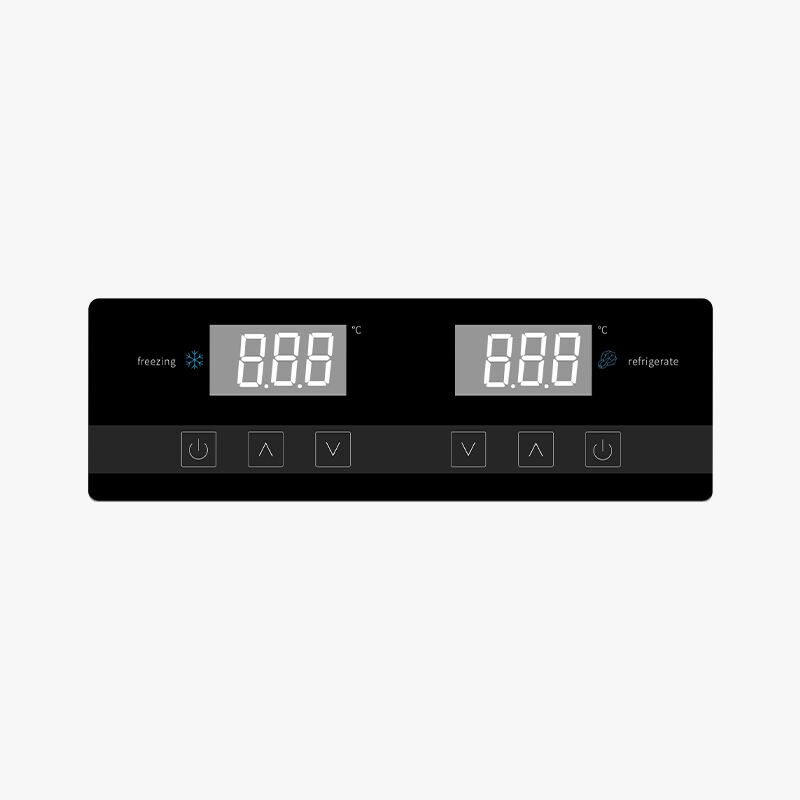
Modern industrial and commercial applications demand precise temperature management solutions that deliver consistent performance and reliability. As we advance into 2025, the landscape of temperature control technology continues to evolve, bringing enhanced features and capabilities that address the complex requirements of various industries. Understanding the essential characteristics of advanced temperature control systems has become crucial for engineers, facility managers, and technicians who need to maintain optimal environmental conditions across diverse applications.
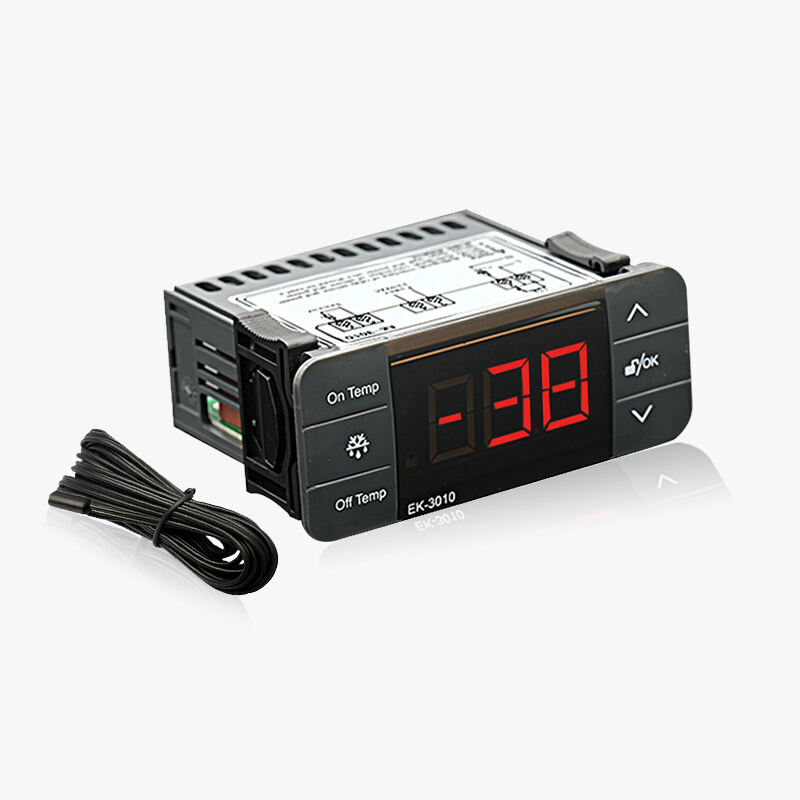
The selection of appropriate temperature control equipment significantly impacts operational efficiency, energy consumption, and product quality in manufacturing environments, food processing facilities, pharmaceutical laboratories, and HVAC systems. Contemporary solutions integrate sophisticated algorithms, user-friendly interfaces, and connectivity options that enable seamless integration with existing automation systems. This comprehensive examination explores the critical features that define superior temperature control technology and their practical applications in today's demanding operational environments.
Advanced Control Algorithms and Programming Capabilities
PID Control Optimization
Professional-grade temperature control systems incorporate advanced Proportional-Integral-Derivative algorithms that automatically adjust heating and cooling outputs based on real-time temperature variations. A sophisticated digital temperature controller utilizes self-tuning PID parameters that adapt to system characteristics, reducing temperature overshoot and minimizing settling time. These intelligent algorithms continuously monitor process variables and make micro-adjustments to maintain precise temperature stability within narrow tolerance ranges.
The implementation of adaptive PID control enables operators to achieve consistent performance across varying load conditions and environmental factors. Modern controllers feature auto-tuning capabilities that automatically optimize PID parameters during initial setup and can recalibrate when system dynamics change over time. This automation reduces the expertise required for installation and commissioning while ensuring optimal performance throughout the equipment lifecycle.
Multi-Zone Temperature Management
Contemporary applications often require simultaneous control of multiple temperature zones with independent setpoints and control strategies. Advanced digital temperature controller systems support cascaded control architectures that manage primary and secondary loops for complex thermal processes. These configurations enable precise control of multi-stage heating and cooling systems, such as those found in pharmaceutical manufacturing, food processing, and environmental testing chambers.
The capability to program different control profiles for various zones allows operators to optimize energy consumption while maintaining required temperature specifications. Sophisticated controllers can execute time-based programs that automatically adjust setpoints throughout production cycles, reducing manual intervention and improving process consistency. Integration with facility management systems enables centralized monitoring and control of distributed temperature control networks.
User Interface and Display Technology
High-Resolution Digital Displays
Modern temperature control interfaces feature high-contrast LCD or LED displays that provide clear visibility of current temperatures, setpoints, and operational status under various lighting conditions. A quality digital temperature controller incorporates intuitive menu structures that allow operators to access configuration parameters, alarm conditions, and historical data without extensive training. Multi-line displays can simultaneously show process variables, output levels, and system diagnostics, enhancing operational awareness and troubleshooting capabilities.
Color-coded status indicators and graphical representations of temperature trends help operators quickly identify system performance and potential issues. Touch-screen interfaces on advanced models provide tablet-like navigation with customizable layouts that can be tailored to specific application requirements. These enhanced displays support multiple languages and measurement units, facilitating deployment in diverse international environments.
Programming and Configuration Tools
Comprehensive programming capabilities enable operators to customize control behavior for specific applications and processes. Professional digital temperature controller units feature parameter scheduling that allows automatic adjustment of setpoints, control parameters, and output limits based on time, external signals, or process conditions. This programmability supports complex manufacturing processes that require precise temperature profiles throughout production cycles.
Configuration software tools provide PC-based interfaces for advanced setup, calibration, and parameter backup functions. These applications often include simulation capabilities that allow operators to test control strategies before implementation, reducing commissioning time and potential process disruptions. Remote configuration capabilities enable system integrators to provide technical support and updates without physical access to equipment locations.
Connectivity and Communication Protocols
Industrial Networking Integration
Integration with industrial automation systems requires support for standard communication protocols such as Modbus RTU, Modbus TCP, Profibus, and Ethernet/IP. A well-designed digital temperature controller provides multiple communication options that enable seamless data exchange with programmable logic controllers, human-machine interfaces, and supervisory control systems. These connectivity features support real-time monitoring, remote setpoint adjustment, and integration with facility-wide automation networks.
Network connectivity enables centralized data logging, alarm management, and performance analysis across multiple control points. Advanced controllers support SNMP protocols for integration with IT network management systems, facilitating remote monitoring and diagnostic capabilities. Ethernet connectivity allows direct integration with enterprise resource planning systems and manufacturing execution systems for comprehensive process management.
Wireless Communication Options
Wireless connectivity options expand installation flexibility and reduce wiring costs in retrofit applications and challenging installation environments. Modern temperature controllers incorporate Wi-Fi, Bluetooth, or cellular communication modules that enable remote monitoring and control through mobile applications and web-based interfaces. These wireless capabilities support cloud-based data storage and analytics platforms that provide insights into long-term system performance and energy consumption patterns.
Secure wireless protocols protect against unauthorized access while maintaining reliable communication links. Battery-powered wireless sensors can extend temperature monitoring to locations where wired connections are impractical, enabling comprehensive facility monitoring with minimal infrastructure requirements. Integration with IoT platforms facilitates predictive maintenance strategies and energy optimization initiatives.
Safety and Protection Features
Comprehensive Alarm Management
Robust alarm systems provide multiple levels of protection against temperature excursions that could damage products, equipment, or compromise safety. A reliable digital temperature controller incorporates configurable high and low temperature alarms with adjustable deadbands and time delays to prevent nuisance alarms while ensuring rapid response to genuine fault conditions. These alarm systems support various output options including relay contacts, analog signals, and network notifications.
Advanced alarm management features include alarm acknowledgment requirements, automatic reset capabilities, and escalation procedures for critical conditions. Historical alarm logging maintains records of all alarm events with timestamps and duration information for regulatory compliance and troubleshooting purposes. Integration with facility alarm systems enables coordinated emergency response procedures and automated notification of maintenance personnel.
Fail-Safe Operation Modes
Critical applications require fail-safe operation modes that ensure safe system shutdown or continued operation under fault conditions. Professional temperature controllers feature configurable failure modes that can maintain outputs at predetermined levels, shut down heating or cooling systems, or transfer control to backup devices when sensor failures or communication losses occur. These protection mechanisms prevent equipment damage and maintain process safety during abnormal operating conditions.
Redundant sensor inputs and voting logic provide enhanced reliability for mission-critical applications. Self-diagnostic capabilities continuously monitor internal system health and provide early warning of potential component failures. Battery backup systems maintain critical functions during power interruptions, ensuring continuous temperature monitoring and alarm capabilities even when primary power is unavailable.
Energy Efficiency and Environmental Considerations
Optimization Algorithms for Energy Reduction
Energy-efficient operation has become increasingly important as organizations seek to reduce operating costs and environmental impact. Modern digital temperature controller systems incorporate optimization algorithms that minimize energy consumption while maintaining required temperature specifications. These algorithms analyze load patterns, ambient conditions, and system characteristics to automatically adjust control strategies for optimal efficiency.
Adaptive control strategies can reduce energy consumption by 15-30% compared to conventional on-off control methods. Time-based scheduling features allow operators to implement energy-saving setback strategies during unoccupied periods or low-demand intervals. Integration with utility demand response programs enables automatic load reduction during peak pricing periods, providing significant cost savings for large facilities.
Environmental Monitoring Integration
Comprehensive environmental monitoring capabilities extend beyond basic temperature control to include humidity, pressure, and air quality measurements. Advanced controllers can coordinate multiple environmental parameters to maintain optimal conditions while minimizing energy consumption. Integration with building automation systems enables holistic facility management that considers occupancy patterns, weather conditions, and operational schedules.
Carbon footprint tracking and reporting capabilities help organizations monitor and reduce their environmental impact. Real-time energy consumption monitoring provides visibility into operational costs and identifies opportunities for efficiency improvements. Integration with renewable energy systems allows controllers to optimize operation based on solar panel output or wind generation availability, supporting sustainability initiatives and reducing dependence on grid power.
Installation and Maintenance Advantages
Simplified Installation Procedures
Professional digital temperature controller designs prioritize ease of installation and commissioning to reduce project costs and implementation time. Plug-and-play sensor connections with automatic detection capabilities eliminate manual configuration steps and reduce wiring errors. Standard DIN rail mounting and industry-standard electrical connections ensure compatibility with existing panel layouts and electrical infrastructure.
Pre-configured application templates provide optimized settings for common applications such as refrigeration, heating, process control, and environmental chambers. Quick-start wizards guide operators through initial setup procedures with step-by-step instructions and built-in validation checks. Comprehensive documentation and video tutorials support field technicians during installation and commissioning activities.
Predictive Maintenance Capabilities
Integrated diagnostic systems continuously monitor system performance and component health to identify potential issues before they cause failures. Advanced controllers track operational statistics such as relay switching cycles, heater element resistance changes, and sensor drift characteristics to predict maintenance requirements. These predictive capabilities enable proactive maintenance scheduling that minimizes unplanned downtime and extends equipment life.
Cloud-based analytics platforms analyze operational data from multiple installations to identify performance trends and optimization opportunities. Remote diagnostic capabilities allow technical support teams to troubleshoot issues and provide guidance without site visits, reducing service costs and response times. Automated maintenance reminders and calibration schedules ensure compliance with regulatory requirements and maintain system accuracy over time.
FAQ
What accuracy specifications should I expect from a quality digital temperature controller
Professional-grade digital temperature controller units typically provide accuracy specifications of ±0.1°C to ±0.5°C depending on the sensor type and application requirements. High-precision models designed for laboratory and pharmaceutical applications can achieve accuracies of ±0.05°C or better when properly calibrated and installed. The overall system accuracy depends on sensor quality, wiring practices, and environmental conditions, so it is important to consider the complete measurement chain when evaluating accuracy requirements.
How do I determine the appropriate control output options for my application
The selection of control outputs depends on the type of heating and cooling equipment being controlled. Relay outputs are suitable for controlling contactors, solenoid valves, and other on-off devices, while analog outputs are required for variable-speed drives, proportional valves, and SCR power controllers. A versatile digital temperature controller should offer multiple output types including mechanical relays, solid-state relays, and 4-20mA analog signals to accommodate various equipment interfaces and control strategies.
What communication protocols are essential for industrial automation integration
Modern industrial facilities typically require support for standard protocols such as Modbus RTU for serial communication and Modbus TCP or Ethernet/IP for network integration. The specific protocol requirements depend on existing automation infrastructure and system integration plans. Controllers with multiple protocol support provide maximum flexibility for current and future system expansions. Web-based interfaces and SNMP support are increasingly important for IT system integration and remote monitoring applications.
How important are safety certifications for temperature control equipment
Safety certifications such as UL, CE, and CSA are essential for ensuring compliance with electrical safety standards and regulatory requirements. Food processing applications may require additional certifications such as NSF or 3-A Sanitary Standards. A properly certified digital temperature controller demonstrates compliance with relevant safety standards and facilitates approval processes for installation in commercial and industrial facilities. International certifications are important for equipment deployed in global manufacturing operations.
Table of Contents
- Advanced Control Algorithms and Programming Capabilities
- User Interface and Display Technology
- Connectivity and Communication Protocols
- Safety and Protection Features
- Energy Efficiency and Environmental Considerations
- Installation and Maintenance Advantages
-
FAQ
- What accuracy specifications should I expect from a quality digital temperature controller
- How do I determine the appropriate control output options for my application
- What communication protocols are essential for industrial automation integration
- How important are safety certifications for temperature control equipment