
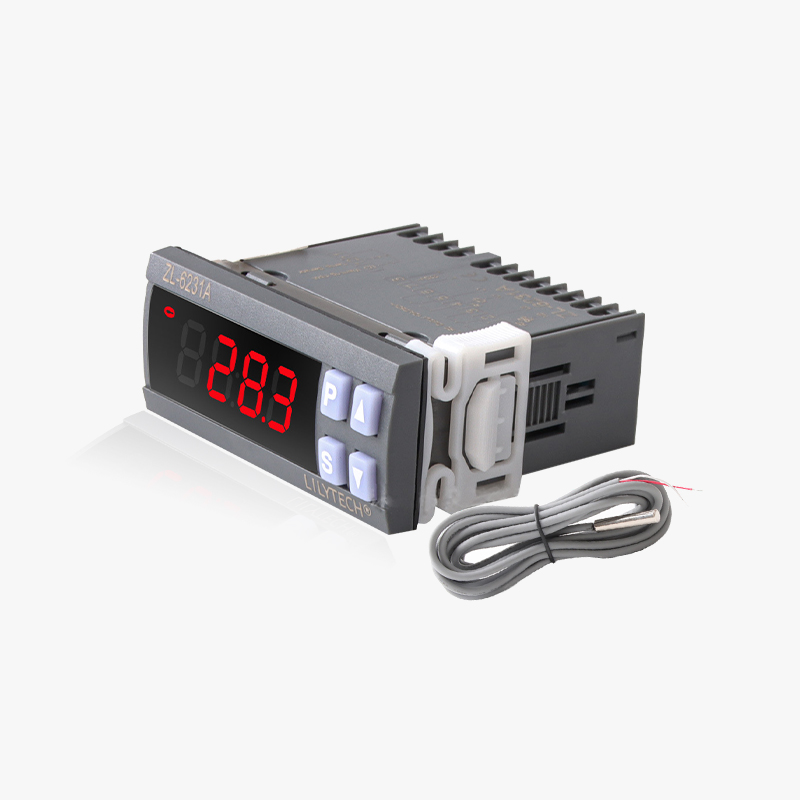
Refrigeration distributors operate in a competitive market where expanding product offerings directly impacts profitability and customer retention. A Temperature Controller represents a strategic addition to any distributor's portfolio, bridging the gap between basic cooling systems and precision environmental management. By developing a dedicated Temperature Controller product line, distributors can unlock new revenue streams, strengthen customer relationships, and position themselves as comprehensive solution providers rather than simple equipment suppliers.

The market demand for precision temperature control continues to grow across pharmaceutical storage, food preservation, laboratory environments, and industrial applications. Distributors who establish a strong Temperature Controller product line early gain competitive advantage, build brand authority, and create recurring service and maintenance revenue. This comprehensive guide explores how refrigeration distributors can strategically develop, market, and scale a profitable Temperature Controller offering.
Understanding the Temperature Controller Market Opportunity
Why Temperature Controller Demand Is Rising
Modern facilities require precise environmental control to maintain product quality, ensure regulatory compliance, and optimize operational efficiency. A Temperature Controller serves as the intelligent interface between cooling equipment and environmental requirements, making it essential across healthcare, food service, manufacturing, and research sectors. Distributors who recognize this shift can differentiate themselves by offering integrated Temperature Controller solutions that address specific industry pain points rather than generic equipment.
Regulatory requirements in pharmaceuticals, food safety, and laboratory standards increasingly mandate precise temperature monitoring and documentation. This regulatory driver creates consistent demand for reliable Temperature Controller systems that provide accuracy, data logging, and alarm capabilities. Distributors can capture this market by positioning their Temperature Controller product line as a compliance enabler, not just a convenience feature.
Market Segmentation for Temperature Controller Products
Successful distributors segment their Temperature Controller offerings by application, facility size, and technical sophistication. Entry-level Temperature Controller products serve small retailers and basic storage applications, while advanced models target pharmaceutical warehouses, clinical laboratories, and food manufacturing plants. This segmentation strategy allows distributors to address diverse customer needs and price points while maximizing their Temperature Controller product line's market penetration.
Geographic and industry-specific markets show varying Temperature Controller adoption rates and feature preferences. Medical facilities prioritize data integrity and compliance features in their Temperature Controller selection, while food distributors emphasize reliability and ease of use. Understanding these regional and sectoral preferences enables distributors to customize their Temperature Controller marketing and product selection strategy accordingly.
Developing a Profitable Temperature Controller Product Line
Selecting the Right Temperature Controller Models
Distributors should begin by assessing local market demand, competitive offerings, and customer feedback to determine which Temperature Controller models best fit their market position. Partnering with established Temperature Controller manufacturers allows distributors to leverage proven technology while building brand credibility without expensive in-house development. A balanced Temperature Controller portfolio typically includes basic digital models for price-sensitive customers, mid-range units with advanced monitoring, and premium solutions for mission-critical applications.
The Temperature Controller selection process should consider technical specifications, warranty support, software integration capabilities, and compatibility with existing customer systems. Distributors who thoroughly evaluate these factors before committing inventory can ensure their Temperature Controller offerings deliver genuine value and minimize returns or customer dissatisfaction. Testing and validating Temperature Controller units in real-world applications before launching also builds distributor confidence and enables stronger customer support.
Pricing Strategy for Temperature Controller Revenue Growth
Profitable Temperature Controller product lines require pricing strategies that reflect value delivery while remaining competitive. Distributors should analyze installed Temperature Controller base costs, margin requirements, market positioning, and competitor pricing to establish price tiers that support healthy profitability. Value-based pricing for Temperature Controller solutions emphasizes time savings, compliance assurance, and reduced product waste rather than purely cost-focused positioning.
Bundling a Temperature Controller with installation, training, and maintenance contracts significantly increases lifetime customer value and improves customer retention. Many distributors discover that Temperature Controller services—monitoring, calibration, support—generate higher margins than equipment sales alone. This service-oriented approach transforms Temperature Controller from a one-time transaction into a recurring revenue relationship that strengthens customer loyalty and distributor profitability.
Marketing and Selling Your Temperature Controller Product Line
Positioning Temperature Controller as a Solutions Driver
Effective Temperature Controller marketing focuses on business outcomes rather than technical specifications alone. Distributors should communicate how their Temperature Controller products reduce energy costs, ensure regulatory compliance, prevent costly product loss, and simplify facility operations. This outcome-focused positioning makes the Temperature Controller value proposition clear to decision-makers and differentiates the distributor's offering from competitors selling generic equipment.
Case studies and customer testimonials demonstrating Temperature Controller impact carry significant influence in B2B decision-making. Distributors who document customer success stories, measurable temperature stability improvements, and compliance achievements create powerful marketing assets. Publishing Temperature Controller case studies across digital channels, industry publications, and trade shows builds credibility and generates qualified sales leads.
Building Sales Team Capability Around Temperature Controller
Sales teams require comprehensive training on Temperature Controller features, technical capabilities, competitive differentiation, and customer pain points to effectively sell the product line. Distributors should invest in Temperature Controller training programs that enable sales representatives to identify customer needs, recommend appropriate solutions, and articulate value propositions clearly. Product-focused training empowers sales staff to position Temperature Controller as a strategic investment rather than a commodity expense.
Technical support and customer education are critical success factors for Temperature Controller adoption. Distributors should develop Temperature Controller installation guides, troubleshooting resources, and training materials that enable customers to maximize value and minimize support burden. When customers understand how to fully utilize their Temperature Controller system, satisfaction increases and the likelihood of repeat purchases and positive referrals improves significantly.
Scaling and Sustaining Temperature Controller Profitability
Creating Recurring Revenue Through Temperature Controller Services
The most profitable Temperature Controller distributors recognize that equipment sales represent only the initial revenue opportunity. Establishing Temperature Controller maintenance contracts, calibration services, monitoring subscriptions, and emergency support programs creates predictable recurring revenue while deepening customer relationships. These Temperature Controller services generate higher margins than product sales and provide stable business foundation.
Digital monitoring and remote management capabilities in modern Temperature Controller systems enable distributors to offer subscription-based services that monitor customer installations and provide proactive alerts. Distributors can charge monthly or annual fees for Temperature Controller monitoring services that provide customers with continuous compliance verification, performance optimization, and predictive maintenance recommendations. This service model transforms Temperature Controller from a static product into a dynamic revenue stream.
Expanding Temperature Controller Market Share
As distributors build Temperature Controller expertise and reputation, expanding into adjacent markets and applications becomes increasingly viable. Cross-selling Temperature Controller solutions to existing customers in other facility types, promoting Temperature Controller products to new geographic markets, and developing specialized Temperature Controller solutions for emerging industry needs all contribute to sustainable growth. Market expansion requires continuous attention to competitor activities, emerging customer requirements, and technological innovations in Temperature Controller systems.
Strategic partnerships with system integrators, facility management companies, and industry consultants accelerate Temperature Controller market penetration. These partners refer customers, recommend Temperature Controller solutions, and enhance distributor credibility within their networks. Building a strong network of Temperature Controller channel partners creates competitive advantages and opens new market segments that individual sales efforts might not easily reach.
FAQ
What margin can distributors expect from a Temperature Controller product line?
Temperature Controller equipment typically generates 25–40% gross margins depending on product tier, volume commitments, and competitive positioning. Premium Temperature Controller solutions and service bundles can achieve higher margins. Adding maintenance contracts and monitoring services to a Temperature Controller offering often generates margins exceeding 50%, making the long-term relationship significantly more profitable than equipment sales alone.
How much inventory should a distributor stock for a new Temperature Controller product line launch?
Initial Temperature Controller inventory should balance market demand forecasts, cash flow constraints, and supplier lead times. Most distributors recommend starting with 30–60 days of Temperature Controller inventory based on conservative demand projections, then adjusting based on actual sales velocity. Partnering with suppliers who offer drop-ship options for Temperature Controller products reduces inventory risk while maintaining product availability.
Which industries represent the best opportunities for Temperature Controller sales?
Pharmaceutical storage and distribution, medical device manufacturing, clinical and research laboratories, food processing and storage, and specialty chemical facilities represent high-margin Temperature Controller opportunities. These industries face strict temperature requirements, regulatory compliance obligations, and high costs associated with product loss. Targeting Temperature Controller marketing toward these sectors typically generates faster adoption and higher willingness to invest in quality solutions.