
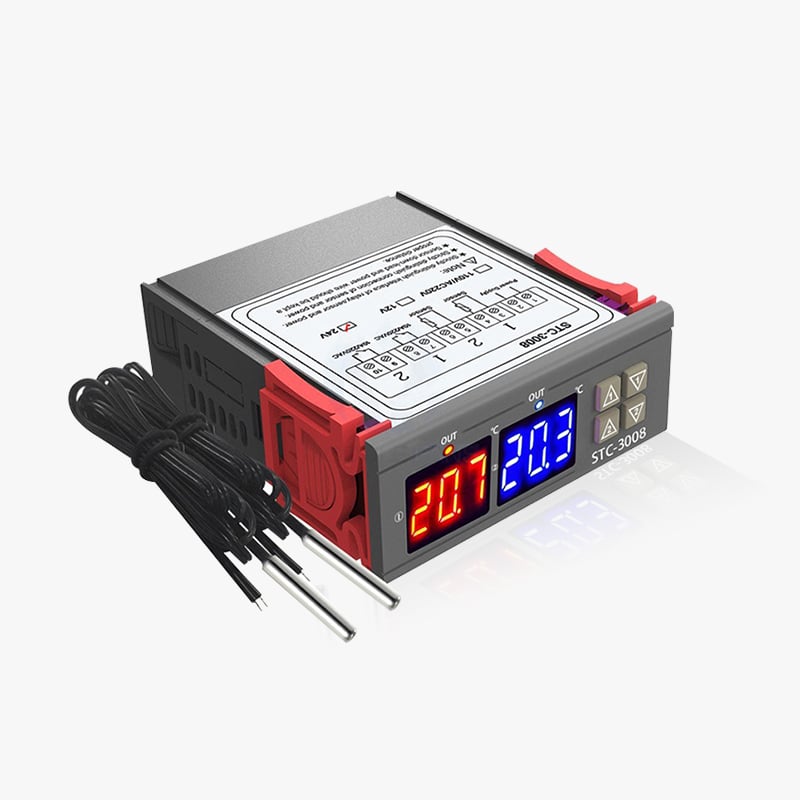
Industrial processes across manufacturing, HVAC, and laboratory environments rely heavily on precise temperature management to ensure optimal performance and product quality. The selection of an appropriate temperature controller system determines whether operations maintain consistent thermal conditions or experience costly fluctuations that impact efficiency. Understanding the fundamental differences between various temperature controller technologies becomes essential for engineers and facility managers seeking reliable thermal management solutions.
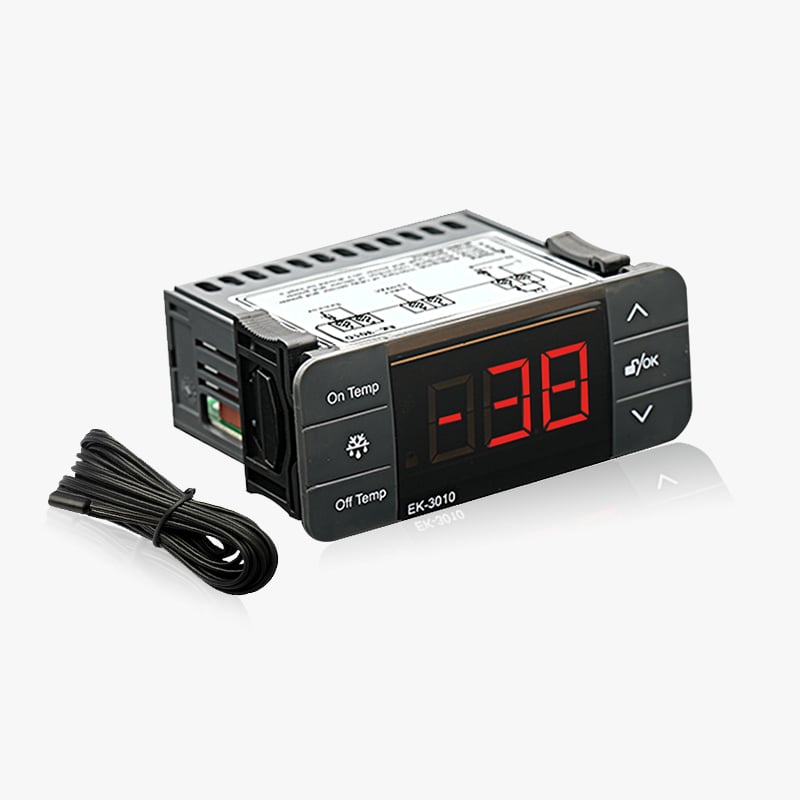
Modern temperature control systems fall into two primary categories that serve distinct operational requirements. On-off controllers provide straightforward binary switching for basic applications, while PID controllers offer sophisticated proportional-integral-derivative algorithms for precision temperature management. Each temperature controller type presents unique advantages and limitations that influence their suitability for specific industrial applications and environmental conditions.
Understanding On-Off Temperature Control Systems
Basic Operating Principles
On-off temperature controller systems operate through simple binary logic that activates or deactivates heating or cooling elements based on predefined temperature thresholds. When the measured temperature falls below the setpoint, the controller energizes the heating system until the temperature rises above the upper threshold. This straightforward approach creates a temperature cycling pattern that oscillates around the desired setpoint value.
The control algorithm relies on hysteresis to prevent rapid switching between on and off states when temperatures hover near the setpoint. This dead band or differential setting ensures stable operation by requiring the temperature to move beyond specific boundaries before triggering state changes. Most on-off temperature controller units incorporate adjustable hysteresis settings to accommodate different application requirements and system response characteristics.
Applications and Limitations
On-off controllers excel in applications where moderate temperature variations are acceptable and precise control is not critical. Residential heating systems, basic industrial ovens, and simple refrigeration units commonly utilize this control strategy due to its cost-effectiveness and reliability. The temperature controller simplicity translates to reduced maintenance requirements and lower initial investment costs for budget-conscious installations.
However, the inherent cycling nature of on-off control creates temperature swings that may be unsuitable for sensitive processes. Precision manufacturing, laboratory equipment, and pharmaceutical applications often require tighter temperature tolerances than on-off systems can provide. The constant switching also increases wear on contactors, relays, and heating elements, potentially leading to premature component failure in demanding applications.
PID Temperature Controller Technology
Advanced Control Algorithms
Proportional-Integral-Derivative temperature controller systems employ sophisticated mathematical algorithms to achieve precise thermal regulation through continuous output modulation. The proportional component responds to the current temperature error, providing output proportional to the deviation from setpoint. Integral action eliminates steady-state offset by accumulating error over time, while derivative control anticipates future temperature trends based on the rate of change.
This three-component approach enables smooth temperature control with minimal overshoot and oscillation. The temperature controller continuously calculates the optimal output level required to maintain the desired setpoint, adjusting heating or cooling intensity in real-time. Auto-tuning features in modern PID controllers automatically optimize the proportional, integral, and derivative parameters for specific system characteristics and load conditions.
Precision Performance Benefits
PID temperature controller systems deliver superior accuracy and stability compared to simple on-off alternatives. The continuous output modulation maintains temperatures within tight tolerances, typically achieving control accuracy of ±0.1°C or better in well-designed systems. This precision proves essential for critical processes such as semiconductor manufacturing, medical equipment sterilization, and analytical instrumentation where temperature variations directly impact product quality.
The smooth control action reduces thermal stress on equipment and products by eliminating the rapid temperature cycling characteristic of on-off systems. Laboratory incubators, environmental chambers, and precision heating applications benefit from the stable thermal environment that temperature controller PID technology provides. Extended equipment lifespan and improved process repeatability often justify the higher initial investment in PID controller systems.
Comparative Analysis of Control Methods
Performance Characteristics
The fundamental difference in control philosophy between on-off and PID temperature controller systems creates distinct performance profiles that suit different application requirements. On-off controllers produce characteristic sawtooth temperature patterns with predictable oscillation amplitudes determined by system thermal mass and hysteresis settings. The cycling frequency depends on heating element capacity, load thermal characteristics, and environmental conditions.
PID controllers achieve remarkably stable temperature profiles with minimal deviation from setpoint values once properly tuned. The continuous output adjustment eliminates the cycling behavior typical of binary control systems, resulting in smooth temperature transitions and steady-state operation. Response time to setpoint changes is typically faster with PID systems due to their ability to apply maximum output during large temperature errors while gradually reducing power as the setpoint approaches.
Economic Considerations
Initial investment costs favor on-off temperature controller systems due to their simpler electronics and reduced component count. Basic thermostats and simple switching circuits cost significantly less than sophisticated PID controllers with microprocessor-based algorithms and advanced display interfaces. Installation complexity is also lower for on-off systems, reducing setup time and commissioning costs for straightforward applications.
However, long-term operational costs may favor PID temperature controller implementations in energy-sensitive applications. The smooth control action and reduced cycling minimize energy waste associated with overshoot and thermal inefficiencies. Reduced wear on switching components and heating elements can lower maintenance costs over the system lifecycle, while improved process control may reduce product waste and rework expenses in quality-critical applications.
Selection Criteria and Application Guidelines
Process Requirements Assessment
Selecting the appropriate temperature controller type requires careful evaluation of process temperature tolerance requirements, response time specifications, and environmental operating conditions. Applications requiring temperature stability within ±1°C or tighter typically necessitate PID control systems to achieve acceptable performance. Processes with slow thermal response times may function adequately with on-off controllers if the natural thermal inertia dampens temperature oscillations sufficiently.
Load characteristics significantly influence temperature controller performance and selection decisions. Large thermal mass systems respond slowly to heating input changes, potentially making them suitable for on-off control despite the binary switching nature. Conversely, low thermal mass applications with rapid temperature response require the smooth control action of PID systems to prevent excessive overshoot and cycling that could damage products or processes.
System Integration Factors
Modern industrial automation systems increasingly demand sophisticated temperature controller interfaces capable of network communication, data logging, and remote monitoring capabilities. PID controllers typically offer advanced connectivity options including Ethernet, Modbus, and other industrial protocols that enable seamless integration with supervisory control systems. Alarm functions, trend recording, and diagnostic features support predictive maintenance programs and quality assurance requirements.
Simple on-off temperature controller systems may suffice for standalone applications with minimal integration requirements. However, the growing emphasis on Industry 4.0 principles and smart manufacturing initiatives favors intelligent controllers with comprehensive communication capabilities. The ability to collect performance data, track energy consumption, and provide remote access often justifies the additional investment in advanced temperature controller technology for forward-thinking operations.
Implementation Best Practices
Installation Considerations
Proper sensor placement and wiring practices are critical for reliable temperature controller performance regardless of the control algorithm employed. Sensors should be positioned to accurately represent the temperature of the controlled medium or environment, avoiding locations subject to drafts, direct heating element radiation, or thermal gradients that could cause erratic readings. Proper sensor immersion depth in liquids and adequate thermal contact in solid applications ensure accurate temperature measurement.
Electrical interference can significantly impact temperature controller accuracy and stability, particularly in industrial environments with variable frequency drives, welding equipment, and high-power switching devices. Shielded sensor cables, proper grounding practices, and physical separation from noise sources help maintain signal integrity. Some temperature controller models include built-in filtering and noise rejection features that improve performance in challenging electromagnetic environments.
Commissioning and Optimization
Initial startup procedures for temperature controller systems should include comprehensive calibration verification and system response characterization. PID controllers require proper tuning to achieve optimal performance, with auto-tuning features providing a starting point for parameter optimization. Manual fine-tuning may be necessary to accommodate specific process requirements or unusual system dynamics that automatic algorithms cannot fully address.
Documentation of temperature controller settings, calibration data, and performance baselines supports ongoing maintenance and troubleshooting activities. Regular verification of sensor accuracy, controller calibration, and system response characteristics helps identify potential issues before they impact process quality. Establishing routine maintenance schedules and performance monitoring protocols maximizes temperature controller reliability and extends service life across all control system types.
FAQ
What factors determine whether a PID or on-off temperature controller is more suitable for my application
The choice between PID and on-off temperature control depends primarily on your required temperature accuracy, acceptable variation range, and process sensitivity. Applications requiring temperature stability within ±1°C typically need PID controllers, while processes tolerating ±5°C or greater variations may function adequately with on-off control. Consider system thermal mass, response time requirements, and whether temperature cycling could damage products or affect quality. PID controllers are essential for precision processes, while on-off systems work well for basic heating and cooling applications where exact temperature maintenance is not critical.
How do installation costs compare between PID and on-off temperature controller systems
On-off temperature controllers generally have lower initial costs due to simpler electronics and reduced component complexity. Basic on-off systems may cost 50-70% less than comparable PID controllers. However, installation complexity, wiring requirements, and sensor specifications are often similar between both types. PID systems may require additional configuration time for parameter tuning but offer more advanced features like communication interfaces and data logging. Consider long-term operational benefits including energy efficiency, reduced maintenance, and improved process control when evaluating total cost of ownership rather than just initial purchase price.
Can existing on-off temperature control systems be upgraded to PID control
Most on-off temperature controller installations can be upgraded to PID control with moderate modifications to the existing system. The upgrade typically requires replacing the controller unit while retaining existing sensors, wiring, and heating elements in many cases. However, some applications may benefit from sensor upgrades to achieve the higher accuracy that PID systems can provide. Solid-state relay outputs are often preferable for PID systems compared to mechanical contactors used in on-off applications. Evaluate whether existing system components can handle the continuous modulation that PID controllers provide rather than simple on-off switching cycles.
What maintenance differences exist between PID and on-off temperature controller types
On-off temperature controllers typically require more frequent maintenance of switching components like contactors and relays due to the continuous cycling operation. The repeated switching creates wear on mechanical contacts that may need replacement every few years depending on switching frequency and load characteristics. PID controllers using solid-state outputs generally have lower maintenance requirements for switching components but may need periodic calibration verification and parameter optimization. Both controller types require regular sensor calibration checks, though PID systems may be more sensitive to sensor drift due to their higher precision requirements. Overall maintenance costs are often lower for PID systems despite their higher complexity.
Table of Contents
- Understanding On-Off Temperature Control Systems
- PID Temperature Controller Technology
- Comparative Analysis of Control Methods
- Selection Criteria and Application Guidelines
- Implementation Best Practices
-
FAQ
- What factors determine whether a PID or on-off temperature controller is more suitable for my application
- How do installation costs compare between PID and on-off temperature controller systems
- Can existing on-off temperature control systems be upgraded to PID control
- What maintenance differences exist between PID and on-off temperature controller types