
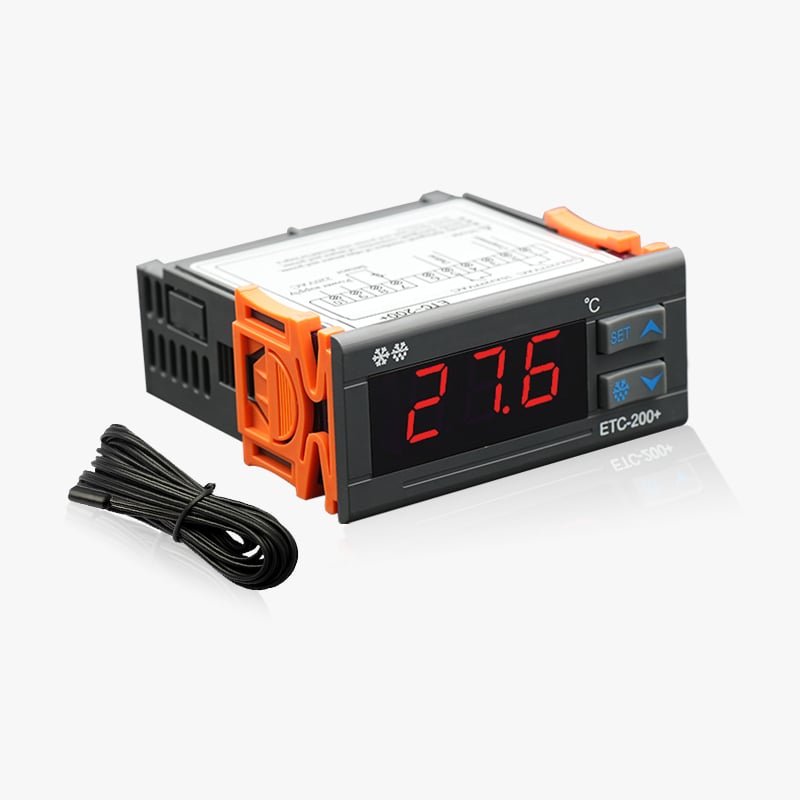
Temperature Controllers are essential components in commercial refrigeration systems that regulate and maintain precise temperature conditions within refrigerated cabinets, walk-in coolers, and freezers. These intelligent devices monitor internal temperatures continuously and automatically adjust compressor operation, defrost cycles, fan speed, and safety alarms to ensure optimal food preservation and energy efficiency. Understanding how Temperature Controllers function across their four primary control domains—compressor management, defrost timing, fan operation, and alarm triggering—is fundamental for facility managers, technicians, and business owners who rely on reliable cold storage infrastructure.
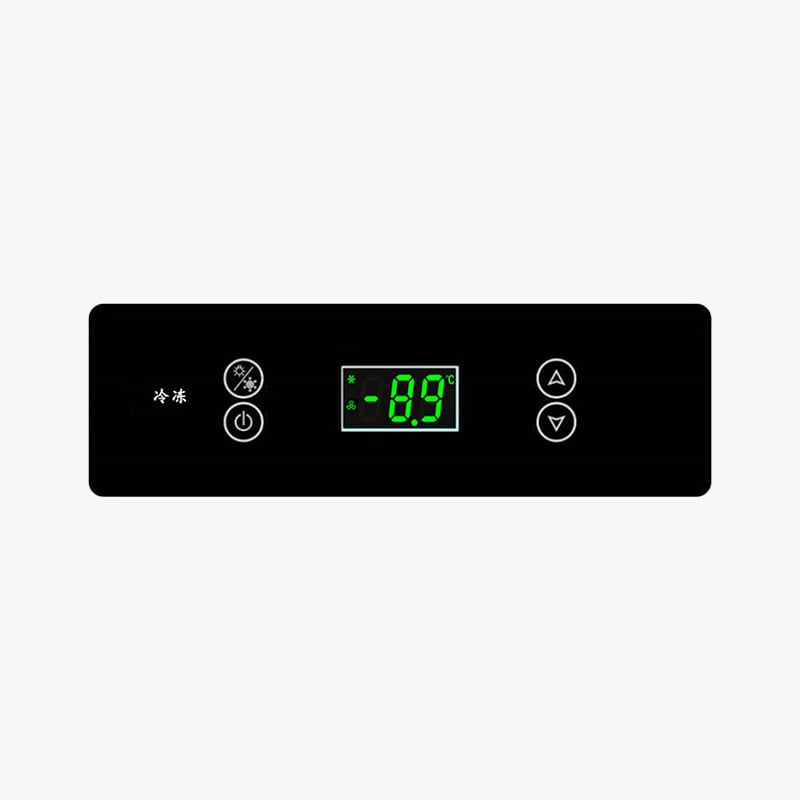
The complexity of modern commercial refrigeration demands sophisticated Temperature Controllers capable of managing multiple interdependent systems simultaneously. Unlike simple on-off thermostats, advanced Temperature Controllers integrate sensor input, logic programming, and relay control to deliver precision regulation that protects product quality, extends shelf life, and reduces energy consumption. This comprehensive guide explores how Temperature Controllers orchestrate compressor cycles, manage defrost sequences, optimize fan performance, and trigger protective alarms to maintain system reliability.
Compressor Control and Temperature Regulation
How Temperature Controllers Manage Compressor Cycles
Temperature Controllers monitor refrigeration cabinet temperature using high-precision sensors and initiate compressor operation when interior conditions exceed the setpoint temperature. The compressor runs continuously until the cabinet cools to the desired setpoint, at which point Temperature Controllers signal the compressor to stop. This on-demand cycling approach prevents continuous compressor operation, which would waste energy and cause excessive temperature fluctuation, while maintaining product safety within narrow temperature bands critical for perishable goods.
Digital Temperature Controllers employ adjustable hysteresis settings that define the temperature differential between compressor start and stop points. For example, a freezer Temperature Controllers might be programmed to activate the compressor when temperature rises to minus 17 degrees Celsius and deactivate when it drops to minus 19 degrees Celsius. This controlled differential prevents short-cycling, which damages compressor components through excessive mechanical stress and reduces equipment lifespan. Temperature Controllers with customizable hysteresis allow facility operators to balance precision temperature maintenance with compressor longevity.
Temperature Setpoint Programming and Precision
Temperature Controllers enable operators to establish exact setpoint temperatures tailored to specific product storage requirements. Refrigerated food storage typically requires Temperature Controllers maintaining 2 to 4 degrees Celsius, while frozen products demand minus 18 degrees Celsius or lower. Commercial bakeries, pharmaceutical warehouses, and specialty food producers utilize Temperature Controllers with independent setpoint configurations for multiple refrigeration zones. Modern Temperature Controllers display real-time cabinet temperature on digital screens and record temperature logs to document regulatory compliance and product safety adherence.
Defrost Cycle Management and Ice Prevention
Automatic Defrost Triggering in Temperature Controllers
Frost accumulation on evaporator coils degrades refrigeration efficiency and eventually prevents cold air circulation entirely. Temperature Controllers automatically initiate defrost cycles at programmed intervals or when temperature sensors detect performance degradation indicating ice buildup. During defrost sequences controlled by Temperature Controllers, the refrigerant circulation temporarily halts while electric heating elements warm the evaporator coils, causing accumulated ice to melt and drain away. This automated defrost management prevents catastrophic equipment failure and maintains consistent cooling performance without manual technician intervention.
Temperature Controllers support multiple defrost strategies including time-based defrost at fixed daily intervals, demand-based defrost triggered by performance metrics, or hybrid approaches combining both methods. Time-based Temperature Controllers defrost at predictable schedules, typically once or twice daily, regardless of actual frost accumulation—appropriate for consistent environments. Demand-based Temperature Controllers monitor evaporator temperature differentials and initiate defrost only when frost adversely affects cooling capacity, conserving energy in low-humidity facilities. Sophisticated Temperature Controllers offer programmable defrost durations and termination logic to prevent excessive heating that raises cabinet temperature and risks product quality.
Defrost Timing and Energy Optimization
Strategic defrost timing controlled by Temperature Controllers significantly impacts operational efficiency and food safety. Most Temperature Controllers schedule defrost cycles during low-traffic periods—overnight for retail establishments—minimizing customer-facing temperature fluctuations and maintaining product presentation. Temperature Controllers with adaptive logic learn facility usage patterns and adjust defrost timing to coincide with periods when temperature excursions pose lowest product risk. By optimizing defrost frequency and duration, Temperature Controllers reduce energy consumption while preventing frost-related equipment damage and temperature control failures.
Fan Operation and Air Circulation Control
Variable Fan Speed Management
Temperature Controllers regulate evaporator fan operation to balance cooling efficiency with energy consumption and noise levels. When cabinet temperature exceeds the setpoint, Temperature Controllers operate fans at maximum speed to maximize cold air circulation and accelerate cooling. As temperature approaches the setpoint, Temperature Controllers may reduce fan speed, decreasing energy draw and operational noise. Advanced Temperature Controllers with variable-speed fan capability maintain precise air circulation proportional to cooling demand, delivering superior temperature stability compared to fixed-speed fan systems controlled by simple on-off switches.
Fan motor protection is a critical Temperature Controllers function preventing mechanical damage and electrical failures. Temperature Controllers monitor fan operation continuously and disable the fan motor if it fails to rotate within expected timeframes, signaling a jam or bearing failure. This protective feature prevents motor burnout from stalled fan conditions and alerts technicians to maintenance needs. Temperature Controllers also prevent fan operation during defrost cycles by cutting fan power to allow evaporator temperatures to rise sufficiently for ice melting, a coordinated control sequence essential for effective defrost management.
Humidity and Condensation Management
Temperature Controllers influence internal humidity through fan operation timing and intensity. Longer fan running periods increase air circulation and evaporative cooling, potentially reducing interior humidity. Conversely, reduced fan operation during defrost cycles and low-cooling-demand periods allows moisture to condense on products and shelving. Temperature Controllers coordinating fan speed with compressor cycles help maintain optimal humidity balance preventing product desiccation while controlling excess condensation that promotes microbial growth and packaging deterioration.
Alarm Systems and Safety Protection
Temperature Alarm Functions
Temperature Controllers protect stored products and business reputation by triggering audible and visual alarms when cabinet temperature deviates dangerously from safe ranges. High-temperature alarms activate when interior conditions exceed predefined limits, indicating cooling system failure, door gasket failure, or excessive ambient heat. Temperature Controllers also feature low-temperature alarms for freezer systems that activate if temperature drops below critical thresholds, signaling potential sensor malfunction or thermostat calibration error. These dual-threshold Temperature Controllers alarms provide early warning enabling rapid technician response before product spoilage occurs.
Alarm delay timers built into Temperature Controllers prevent nuisance alarms from brief, recoverable temperature excursions during door openings or restocking cycles. Configurable alarm thresholds in Temperature Controllers accommodate diverse regulatory requirements across food service, pharmaceutical, and industrial sectors. Remote alarm communication capabilities in modern Temperature Controllers enable facility managers to receive email, SMS, or application notifications alerting them to temperature deviations even outside business hours, enabling emergency response before critical product loss occurs.
Sensor Fault Detection and System Diagnostics
Temperature Controllers continuously validate sensor functionality by monitoring signal patterns and comparing multiple sensors when redundant measurement points exist. Sensor failure alarms in Temperature Controllers detect broken probes, loose connections, or signal degradation that would render temperature regulation unreliable. When Temperature Controllers detect sensor faults, they trigger alarms and may revert to safe default operations protecting stored products from uncontrolled temperature changes during troubleshooting. Diagnostic readouts on Temperature Controllers display sensor status, historical temperature records, and system event logs valuable for technician troubleshooting and compliance documentation.
FAQ
What temperature range should commercial refrigeration Temperature Controllers maintain?
Standard refrigeration Temperature Controllers maintain 2 to 4 degrees Celsius for fresh food storage, while freezer Temperature Controllers maintain minus 18 degrees Celsius or lower. Specific setpoints depend on stored product type and applicable food safety regulations. Pharmaceutical and specialty applications may require different Temperature Controllers settings. Consult product-specific storage guidelines and local health codes when configuring Temperature Controllers setpoints for your facility.
How frequently should Temperature Controllers trigger defrost cycles?
Defrost frequency controlled by Temperature Controllers depends on humidity levels, facility usage patterns, and evaporator design. Most commercial Temperature Controllers utilize daily defrost cycles, typically once or twice per day, scheduled during low-traffic periods. High-humidity environments may require more frequent defrost cycles managed by Temperature Controllers, while dry facilities may need fewer. Temperature Controllers with demand-based defrost logic automatically adjust frequency based on actual frost accumulation, optimizing energy efficiency while preventing ice buildup.
Can Temperature Controllers reduce energy consumption in commercial refrigeration systems?
Yes, advanced Temperature Controllers significantly reduce energy consumption through optimized compressor cycling, variable fan speed control, and efficient defrost management. Temperature Controllers with adaptive algorithms learn facility usage patterns and adjust operations accordingly, reducing unnecessary compressor runtime. Precise temperature control by Temperature Controllers minimizes energy-wasting temperature swings. Energy-efficient Temperature Controllers combined with quality insulation and proper maintenance can reduce refrigeration electricity consumption by 15 to 25 percent compared to systems using basic on-off thermostats.